The Conversation training: reach a global audience
Leiden researchers share their work with a global audience through the international journalistic platform The Conversation. What are the benefits? And how does it work? Two researchers talk about their experiences and why colleagues should consider taking the same step.
Since 1 January 2024, Leiden University has been affiliated with The Conversation, an international not-for-profit news platform that makes academic knowledge accessible to a broad audience. With dozens of publications and a global reach, The Conversation has proven to be a powerful platform for Leiden researchers. In 2025, 44 articles reached over 700,000 readers, from Australia to the US, and often served as a springboard to international media. On Monday 11 May, an editor from The Conversation will run a training session for our researchers, showing you how you too can publish on the platform
Andrew Gawthorpe (US expert) and Florian Neukart (quantum computing specialist) share their experiences with the platform. What do you gain from writing for The Conversation?
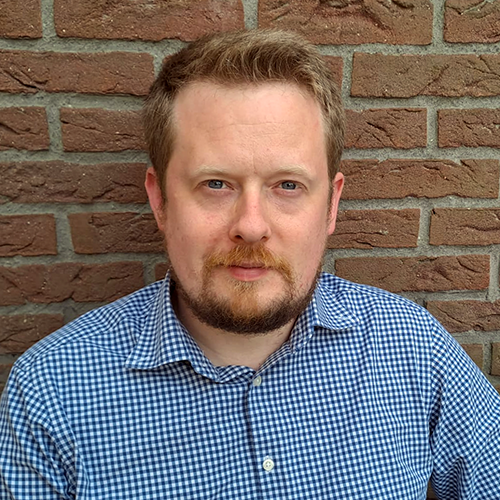
‘For me, The Conversation is particularly valuable because it gives researchers the opportunity to bring their work to a wide audience. Editors approach you when your expertise is relevant, but you can also pitch your own ideas. They help you present your work in a way that is clear and accessible, with the right context, which makes it a very positive collaboration.
What I initially didn’t fully appreciate is just how far the reach extends. Anything you write can be picked up by other media around the world. For example, my work appeared on the front page of a major newspaper in India and was read by tens of thousands of people. The platform also acts as a springboard to other media. After an article I wrote on Trump’s national security strategy, I was invited to appear on a major radio station in San Francisco. That interview then led to in-depth features in newspapers such as Italy’s L’Indro and France’s Libération.
Through the dashboard, you can see how many people have read your article, which countries they are from, and where your work has been republished. It’s really exciting to see! One of the key strengths of the platform is that it is viewed by the media as an authoritative source of academic experts. Ultimately, that is the greatest benefit for me: you reach a global audience and build valuable relationships with journalists around the world.’
Most read article (almost 100,000 times): Shooting of Alex Pretti in Minneapolis has put America’s gun lobby at odds with the White House

‘I was first approached by my Faculty’s communications department, and although I knew the platform as a reader, I hadn’t considered publishing there myself.
Working with my editor, Miriam, has been particularly valuable. She helps refine my articles, ensuring complex concepts – like quantum entanglement – are understandable to a broader audience. Translating technical ideas into clear, engaging language is a skill that the editorial guidance really helps develop.
The reach of the platform is impressive. My articles have been read tens of thousands of times, translated into Portuguese, and even picked up by Popular Mechanics (“Pop Mec”), giving my work exposure to new audiences beyond academia.
Equally important is the engagement with readers. The articles spark questions and discussions, and I make an effort to respond to serious inquiries. While not every comment leads to a productive discussion, the opportunity to interact directly with a broader audience and see how people interpret and challenge your ideas is incredibly insightful.
Beyond that, I encourage fellow researchers who are considering writing for the platform to reach out to me if they have questions or ideas – I’m very happy to share my experience. Other than that, I would say: just do it.’
Most read article (over 128.000 times): Is time a fundamental part of reality? A quiet revolution in physics suggests not
Learn how to write and pitch for The Conversation
On Monday 11 May, an editor from the science news platform The Conversation will give an online training course for staff from Leiden. During the training, you will learn more about The Conversation’s way of working and have the opportunity to discuss potential angles for articles you could write for the platform. The training is free, but places are limited, so sign up soon!
To the training