1,320 search results for “plant” in the Public website
-
Study associations
The Faculty of Science has multiple study associations, which organise both study-related and social activities for students.
-
P.J. Veth Building (completed)
The refurbished P.J. Veth Building - the first completed sub-project in the Humanities Campus project - was officially opened in the summer of 2017. The Faculty of Humanities moved in straight away. . The building was meticulously transformed into a modern teaching building with attractive areas for…
-
Sebastiaan Grosscurt
Being a better neighbour to the nature around you
-
Archaeological Sciences
With the emergence of new methods and technologies such as improved DNA analysis and big data, archaeological research has changed radically in recent decades. The researchers from the Department of Archaeological Sciences at the Faculty of Archaeology use new scientific knowledge to answer fundamental…
-
Bakola documentation project
The aim of this project is the linguistic documentation of Bakola, a Narrow Bantu language.
-
Biophysical Organic Chemistry
The long term goal of the Biophysical Organic Chemistry/SSNMR group, headed by Prof. Huub de Groot, is to reach an understanding of structure, dynamics and functional mechanisms of membrane proteins and self-organized biological assemblies and to translate this knowledge into new concepts for nano-devices,…
-
Group interests: rights of indigenous peoples
Industrialised countries extract natural resources in the territories of indigenous peoples, and appropriate the knowledge and culture of these peoples. Leiden anthropologists work to protect the rights of indigenous peoples. Their knowledge and advice enable governments to source sustainable produc…
-
Nutrition
Radiation can be used to determine the isotope ratio of a skeleton. This provides information about where our ancestors lived and what they consumed. Dr Andrea Waters has developed a revolutionary method that can trace patterns of consumption from tens of thousands of years ago.
-
Science for Society
By carrying out fundamental research and providing excellent education, universities become a breeding ground for innovation and entrepreneurship.
-
Nationalism: A World History
A global perspective on the nature and evolution of nationalism, from the early modern era to the present.
-
LED3 Lectures
The LED3 hub, consisting of researchers from the Leiden Institute of Chemistry (LIC), the Institute of Biology Leiden (IBL), the Leiden Academic Centre for Drug Research (LACDR) and the Leiden Institute of Advanced Computer Science (LIACS), is very excited to organize the “LED3 Lectures”. This lecture…
-
Citizen Science Lab
Leiden University's Citizen Science Lab supports and organizes initiatives where anyone can get started with scientific data and research. This is how we enrich research with insights from the community, make science accessible to all, and tackle important local issues together.
-
Hortus botanicus Leiden
Hidden behind the Academy Building on the Rapenburg lies the oldest botanical garden of the Netherlands and one of the oldest gardens in the world. Founded in 1590 and expanded in the following centuries, the Hortus is the green heart of Leiden.
-
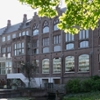 P.J. Veth
Nonnensteeg 1-3, Leiden
-
Computer Science at Leiden University
Leiden Institute of Advanced Computer Science (LIACS)
-
Get involved: Faculty activities
Welcome to the Leiden Science community! Throughout the year, our faculty hosts a range of events designed to bring together students and staff. From interesting lectures to lively gatherings and ceremonial milestones, there’s always something happening for you. Explore the upcoming events and make…
-
What to focus on for a clean environment?
The earth has more than 7 billion inhabitants, all of whom leave behind traces of pollution. However, not all forms of pollution have the same harmful effect. Leiden scientists help determine where we should put our priorities.
-
Awards and Grants 2026
On this page you will find an overview of awards and prizes granted to our staff and students in 2026, as well as special appointments at Leiden University and other institutions.
-
From a child in the orchard to director of the botanical garden
At the age of six, Barbara Gravendeel already knew what she wanted to be: a biologist. The seed was planted in the garden of her childhood home: an old orchard surrounded by a large hedge. Since 1 May, she has been the scientific director (prefect) of the Hortus botanicus in Leiden, and all the pieces…
-
Hiroshima Peace Tree comes to Blekerspark
On 23 September, the Leiden alderman for the Management of Public Space was presented with a Ginkgo Biloba in the Blekerspark. This special 'Peace Tree' was grown from a seed from a tree that survived the atomic bomb that devastated Hiroshima. The Peace Tree is being temporarily housed in Leiden's Hortus…
-
A close view of a light-stress sensor in photosynthesis
Plants use sunlight to perform photosynthesis, but with too much light they have to dim their activity and protect their cells against photo damage. The protein PsbS acts as a light-stress sensor and plays a key role in this process. Article in Nature’s Scientific Reports.
-
Two Leiden professors appointed KNAW members
The Royal Netherlands Academy of Arts and Sciences (KNAW) announced on 25 April that it has appointed 18 new members. These include Leiden professors Andrew Webb and Jos Raaijmakers.
-
2.8 million euros for photosynthesis research
In the programme NWO Open Competition Domain Science - GROOT, twenty new consortia will start a large research project. This boost of more than 47 million euros will make new research possible in the science domain. Among the winners is the Nanoscale Regulators of Photosynthesis consortium in which…
-
Archaeologist Amanda Henry linked to Naturalis as Professor by Special Appointment on the Evolution of the Human Diet
Starting September 2024, Amanda Henry has started a new role as Professor by Special Appointment on the Evolution of the Human Diet at Naturalis Biodiversity Center in Leiden. She will use this position to draw closer ties between the Faculty of Archaeology and Naturalis, and explore means for public…
-
Flower bulbs to treat Alzheimer's
The substance galanthamine from flower bulbs can fight symptoms of Alzheimer's disease. Nadeem Akram investigated how daffodils can optimally produce this natural remedy. PhD defence on 24 June.
-
Martienke Baaij receives the “Kees Bakker Award”
Leiden Biology student Martienke Baaij received the annual award for being the best BSc-student in 2017 from the “Stichting Professor Dr. K. Bakker-fonds”.
-
Three Leiden papers in top 10 most cited of Journal of Archaeological Science: Reports
At the start of the year a lot of journals publish lists of their most cited papers of the previous year. Three papers published by Leiden archaeologists were ranked in the top 10 of the Journal of Archaeological Science: reports.
-
Ecosia now available at Leiden University computers
LUGO has some news: If you are using a public computer from Leiden University, you can now set your default search engine to Ecosia.
-
Saving threatened orang-utans with climate change-resilient trees
A study of the International Union for Conservation of Nature has identified tree species native to Indonesia’s Kutai National Park that are resilient to climate change. The species support threatened East Bornean orang-utan populations; therefore, the study recommends their use in reforestation efforts.…
-
Omid Karami receives the Krijn Rietveld Memorial Innovation Award during festive ceremony
In a festive and intimate award ceremony, plant scientist Omid Karami received the first edition of the Krijn Rietveld Memorial Innovation Award out of the hands of Wim Klop, Director of the Biotechnology Center at DSM. Several speakers spoke about Krijn Rietveld and why Karami deserves the prize that…
-
Nadia Soudzilovskaia wins prestigious German research prize for international fungi research
Environmental scientist Nadia Soudzilovskaia has been awarded the prestigious, international Bessel-Forschungs prize issued by the Von Humboldt foundation. This German award is issued to outstanding foreign mid-career scientists that collaborate with German researchers. ‘The combination of different…
-
Microbes protect crops from microbes
Farmers do not love them all. Microbes can cause tragic consequences for crops. Even the presence of just one pathogenic fungus or bacterium can drastically reduce yields. Still, there are exceptions. In that case, a pathogenic microbe is present in the soil, but does not cause any harm. Adam Ossowicki…
-
New research at the Hortus: the delimitation of the genus Uvaria L.
In the tropical rainforests of Southeast Asia the soursop family (Annonaceae) can be found. The genus Uvaria is a part of this family, but it has not yet been described entirely correctly. That is what Annas Rabbani will be studying during the next four years as a PhD student at the Hortus botanicus…
-
Unveiling the hidden world of wood
For four years, Vicky Beckers examined thin slices of wood under a microscope, mapping the anatomy of two plant families. Her research helps identify different wood species, benefiting both the timber trade and archaeology.
-
Pavement gardens are crucial to urban biodiversity
They are often little more than a square metre of plants, yet pavement gardens are a source of life. PhD candidate Joeri Morpurgo conducted research in the centre of Amsterdam and The Hague and discovered how important small green spaces are, especially for cities.
-
Students on expedition to Borneo
Every two years, students from Leiden University go into the Malaysian rainforests of Borneo. There they speak with Malaysian people to discover the use of plants or learn a local fishing technique. Improvising in the jungle leads to fruitful, creative, and important research.
-
Biology student Martijn Verkuilen wins Unilever Research Prize
Martijn Verkuilen is the winner of the Unilever Research Prize 2022. By transferring DNA from a plant into yeast, he made the first move to produce a new drug for type 2 diabetes. He collected his prize in Wageningen on 24 November.
-
North Wales Botany Club Trip 2016
Between the 29th of April and the 2nd of May 2016 the Botany Club went on its annual excursion. This time, the theme was alpine and arctic plants and their ecology, and (peri-) glacial processes and features. Where better to search for arctic/alpine plants and experience glacial geomorphology than…
-
Rob Schilperoort Memorial unveiled at Leiden Bio Science Park
The Rob Schilperoort Memorial will be unveiled at the Leiden Bio Science Park on Saturday 16 September. This gigantic gate stands at the entrance to the park, which is also named after Schilperoort, its founder.
-
Plane trees moved to Herta Mohr building
The plane trees from the forecourt of Cluster North have been moved to the Herta Mohr building (Cluster South). The trees could not remain in their original location because of the forthcoming renovation of Cluster North. They have been moved already in advance of the flowering season. In June, the…
-
City Biologist Menno Schilthuizen wins Jan Wolkers Prize 2018
The book 'Darwin comes to town’ by Menno Schilthuizen has been awarded the best nature book in the Netherlands. The Leiden biologist received the Jan Wolkers Prize, awarded annually by Dutch TV and radio show 'Vroege Vogels'. In his book Schilthuizen describes evolution in one of the newest and most…
-
Pam Engelberts receives the “Kees Bakker Award”
Leiden Biology student Pam Engelberts received the annual award for being the best BSc-student in 2016 from the “Stichting Professor Dr. K. Bakker-fonds”.
-
Solar panels and sedum on the roof of Snellius: A first for Leiden University
One of the largest roofs at Leiden University, that of the Snellius building, has recently been equipped with 590 solar panels and 57,000 sedum plants, making it the largest combined roof in the Benelux. The roof was officially opened on Monday 10 October by Annetje Ottow and Martijn Ridderbos, President…
-
Wat is er te doen op de Leidse Museumnacht?
Op zaterdag 3 juni vindt de Museumnacht Leiden plaats. Ook dit jaar zijn Leidse wetenschappers en studenten onderdeel van de programmering.
-
Faculty of Science reinforces collaboration in China
The Faculty of Science has reinforced the collaboration in China during a group trip late November. Representatives from four institutes visited ten Chinese top universities and interviewed over 130 students in PhD workshops in Beijing and Shanghai.
-
National flower: The daisy is everywhere thanks to men with mowers
The daisy has been crowned the Netherlands’ national flower. Rogier van Vugt, Head of Horticulture at the Hortus botanicus, explains why the daisy merits its elevation to national symbol.
-
What we can learn from hi-tech nature
Biodiversity in the Netherlands is having a tough time. Professor of Natural Capital Koos Biesmeijer combines research with practical advice: from the greening of industrial parks to solutions inspired by hi-tech nature. Inaugural lecture 9 March.
-
Dutch creative with food during World War II
During the Dutch famine of 1944–45, people were much more creative in finding food than we thought. Biology student Tom Vorstenbosch discovered that people did not only eat flower bulbs at that time, but also radish leaves and wild plants such as sorrel and chickweed.
-
‘Nature likes a mess’
Wouter Moerland is on a two-year secondment as ecology adviser at the Municipality of Leiden. This biology alumnus talks animatedly about his work. ‘We’re working hard to increase nature’s chances in town.’
-
Abrupt Climate Change and Cultural Transformation in Syria in Late Prehistory (c. 6800-5800 BC)
This abrupt climate change of 8200 years ago (the so-called 8.2k calBP climate event) has received wide attention among natural scientists, also because of today's rapid climate changes and their impact on our own society. The archaeological implications, however, have not been investigated so far.…