1,868 search results for “intellectual property” in the Public website
-
Internships
The SBB Internship is a great Opportunity for both Students and Organisations: Almost all SBB students look back upon their internship with positive feelings, since it is a valuable experience.
-
 Jacqueline Hylkema
Faculty of Governance and Global Affairs
j.j.hylkema@luc.leidenuniv.nl | 070 8009500
-
Copyright over your own face and voice
To tackle deepfakes, Denmark proposes expanding copyright law so everyone gets copyright over their own face and voice. There are similar ideas in the Netherlands with an online consultation. In Latvian newspaper ‘Latvijas Avīze’, Dirk Visser and Bart Custers discuss the proposals.
-
AI models are full of Dutch art – what about copyright violation?
Are AI models such as Midjourney violating artists' copyright? Dirk Visser, Professor of Intellectual Property Law, spoke about this topic on Dutch current affairs news programme 'NOS Radio 1 Journaal' .
-
‘I want to do meaningful, intellectually stimulating work’
‘To be honest, I knew very little about the Netherlands when I arrived in 1998. But studying law in Leiden was a very enriching experience.’ Nathalie van den Berge grew up in a number of different European countries, and now works at a UN office in Tanzania, where she lives with her Dutch husband and…
-
Mild Intellectual Disability and Loneliness: 'We Need to Handle the Discomfort Better'
Individuals with a mild intellectual disability often experience loneliness more frequently than others. In a new NWA project, social history lecturer Paul van Trigt is collaborating with and for them to find a suitable approach.
-
 Elizabeth Rodriguez Estrada
Faculty of Archaeology
e.e.rodriguez.estrada@arch.leidenuniv.nl | 071 5272727
-
Coherent Private Law
Is private law ready for the challenges of our time?
-
New quantum computer design to predict molecule properties
The standard approach to build a quantum computer with Majoranas as building blocks is to convert them into qubits. However, a promising application of quantum computing—quantum chemistry—would require these qubits to be converted again into so-called fermions. Physicists from Leiden and Delft suggest…
-
Marianne Maeckelbergh receives ERC Consolidator grant for project ‘Property and Democratic Citizenship’
Marianne Maeckelbergh has received a Consolidator grant from the European Research Council for a project on the impact of property regimes on experiences of citizenship. The project will be carried out in five democratic countries: Greece, The Netherlands, Spain, the United Kingdom and the United St…
-
The Golden Mean of Languages; Forging Dutch and French in the Early Modern Low Countries (1540-1620)
In The Golden Mean of Languages, Alisa van de Haar sheds new light on the debates regarding the form and status of the vernacular in the early modern Low Countries, where both Dutch and French were local tongues. The fascination with the history, grammar, spelling, and vocabulary of Dutch and French…
-
 Lionel Laborie
Faculty of Humanities
l.p.f.laborie@hum.leidenuniv.nl | 071 5273546
-
 Jiyan Ilbrink
Faculty of Humanities
j.ilbrink@hum.leidenuniv.nl | 0715272977
-
Digital Force: Life, Liberty & Livelihood in the Information Age
On 9 May 2018, Roy van Keulen defended his doctoral thesis 'Digital Force: Life, Liberty & Livelihood in the Information Age'. The doctoral research was supervised by Prof. dr. A. Ellian.
-
Photo Report: Bachelor's Open Day KOG
On Saturday 22 October, the KOG filled up with prospective students looking for their next course of study. The lecture halls were packed to the brim with curious potential lawyers. Between study presentations, information could be gathered throughout the building at the designated information market…
-
Kimia Heidary and Helen Pluut win Best Paper Award
Kimia Heidary and Helen Pluut received the Best Paper Award at the Munich Summer Institute for their paper on consumer perceptions and personalized pricing.
-
The scholarly self: character, habit, and virtue in the humanities, 1860-1930
Why did 'character', 'habit', and 'virtue' serve as key terms in late 19th and early 20th-century scholarly correspondences, biographies, and obituaries? Why did scholars around 1900 display so much interest in the working habits and character traits of what they called the 'scholarly self'?
-
Papers: Imperial Artefacts. History, Law, and the Looting of Cultural Property
Call for Papers: Imperial Artefacts. History, Law, and the Looting of Cultural Property
-
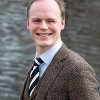 Egbert Koops
Faculteit der Rechtsgeleerdheid
e.koops@law.leidenuniv.nl | 071 5277527
-
The idea of the primitive hut
Subproject of
-
The building as book as a new origin of architecture
Subproject of
-
 Tobias van der Wal
Faculteit der Rechtsgeleerdheid
t.b.d.van.der.wal@law.leidenuniv.nl | 071 5276879
-
Primitivism and architectural theory
Subproject of
-
Scholarly Dogmatism: A Rhetorical History, 1800-2000
This project traces how, why, and under what circumstances scholars invoked the trope of “dogmatism,” especially in controversies. Relevant controversies from various fields, periods, and countries will be subjected to in-depth rhetorical analysis.
-
Professorial Families in German-speaking Europe, 1860-1930
How was the Scholarly Self cultivated in professorial families of the humanities, in German-speaking Europe between 1860 and 1930?
-
Charlotte Holt: 'This internship has allowed me to grow as a person, intellectually, and mentally’
Charlotte Holt is a second year International Justice student at Leiden University College. She did an internship at Academia Neerlandesa; a language school that offers Dutch language courses to medical professionals. ‘An internship can become very beneficial for those who wants to discover where their…
-
The quest for the legitimacy of architecture in Europe (1750-1850)
This programme aims to identify the intellectual contexts that were of importance for the architectural theory of the period, and especially to clarify the relation of architectural theory to primitivism.
-
Philosophers’ Annual: ‘It is not relationships between objects, but absolute properties that are most important’
An article by assistant professor Caspar Jacobs has been included in the prestigious Philosophers’ Annual, which compiles the ten best philosophy articles each year. In ‘Comparativist Theories or Conspiracy Theories?’, he addresses the question of whether objects have fundamental properties.
-
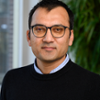 Vineet Thakur
Faculty of Humanities
v.thakur@hum.leidenuniv.nl | 071 5271256
-
Idols of the Mind: Modern Variations on a Baconian Theme, 1800-2000
Drawing on a broad array of sources, this project examines modern retrievals of Bacon’s idols, thereby testing Justus von Liebig’s intriguing observation, back in 1863, that Bacon’s name lived on mainly in mottos or stereotypical phrases. More importantly, it examines the rhetorical purposes served…
-
The Dark Middle Ages: Language of Vice in Histories of Science, 1700-1900
In comparing a selection of 18th-century histories to a representative sample of 19th-century histories of science, this project inquires: Which early modern vices persisted into the 19th century and to what extent were those vices embodied in anecdotes, conveyed through commonplaces, or symbolically…
-
Hodegetics: Language of Vice in Student Advice Literature, 1700-1900
This project analyzes to what extent hodegetical textbooks relied on each other in warning their readers against vicious habits, how much continuity their catalogs of vice displayed, and to what extent vices that persisted throughout the 18th and 19th centuries were associated with easy-to-remember…
-
Falling Short of Expectations: Evaluative Languages in Scholarly Book Reviews, 1900-2000
What evaluative languages (errors, mistakes, vices, etc.) did book reviewers employ? To what extent and on what occasions did they invoke early modern vices? And to what extent did this differ across fields or change over the course of the century?
-
Pride and Prejudice: Moral Languages in Scholarly Codes of Conduct, 1900-2000
If idioms employed in codes of conduct could be as idiosyncratic as examples suggest, then to what extent did early modern language of vice, too, persist in this genre?
-
Leiden-Benghazi Research Project on Real Property Issues in Libya
Dr Suliman Ibrahim of the Van Vollenhoven Institute (VVI) will conduct research on problems concerning real property in Libya. The project is commissioned by the Netherlands Ministry of Foreign Affairs.
-
‘It’s a great motivator if your research can be life-changing in the real world’
Our university labs are bursting with cutting-edge research, but how do you commercialise these inventions and discoveries or translate them into outcomes that benefit society? Professor of biological chemistry Nathaniel Martin started a spin-off company with his team. ‘When it comes to valorisation…
-
 Tycho de Graaf
Faculteit der Rechtsgeleerdheid
t.j.degraaf@law.leidenuniv.nl | 071 5274989
-
New paper on: 'Legal Barriers and Enablers to Big Data Reuse: A Critical Assessment of the Challenges for the EU Law'
eLaw colleagues Bart Custers and Helena Ursic have a new publication in the peer-reviewed journal The European Data Protection Law Review.
-
Prestigious Pierre Elliot Trudeau Fellowship for VVI PhD Student Camille Lefebvre
Camille Lefebvre, PhD candidate at the Graduate School of International Studies of Université Laval and the Van Vollenhoven Institute for Law, Governance and Society of Leiden Law School, has been selected as a recipient of the Pierre Elliott Trudeau Foundation Fellowship and Leadership Program.
-
Ben Van Rompuy speaks at Congress of the International League of Competition Law
Dr. Ben Van Rompuy participated as an invited expert in the annual Congress of the International League of Competition Law (LIDC), held this year in Vienna from 9 to 12 October.
-
Leiden Institute for Philosophy
Explore philosophical research and education at the Leiden Institute for Philosophy. Our scholars study knowledge, ethics and existence, connecting classical and contemporary thought.
-
Nico Schrijver member of EU-UK Withdrawal Agreement Arbitration Panel
Nico Schrijver professor emeritus in Public Law and State councillor at the Council of State has been appointed by the European Union and the United Kingdom as a member of the Arbitration Panel which is authorised to settle disputes on the EU-UK Withdrawal Agreement.
-
Photo report Bachelor’s Open Day KOG
On 25 February, the KOG opened its doors once more to welcome a large crowd of people looking to find their perfect study programme during the Bachelor’s Open Day. The aspiring students were welcomed in the various lecture halls where they were able to experience the ins & outs of the available programmes…
-
Masterclass: Why did Pope Gregory the Great make churches give up property? (Roy Flechner, University College Dublin)
On the 7th and 8th of November, Radboud University and Utrecht University are jointly organising a masterclass for (Re)MA students and PhD candidates on the life and times of those lay people dependent on monasteries.
-
 Sara Bolghiran
Faculty of Humanities
s.bolghiran@hum.leidenuniv.nl | 071 5271693
-
MIRD students engage with high-level diplomacy during Geneva study trip
From 26 to 28 May, second-year students of the Advanced MSc International Relations and Diplomacy (MIRD) participated in the programme's annual visit to Geneva, Switzerland.
-
Gold nano-antennas reveal single molecules’ electrochemical properties
Individual molecules are extremely hard to see through feeble fluorescence. Tiny gold nanorods serve as new antennas to intensify their signal 500 times. Publication on 24 February in Angewandte Chemie.
-
La llamada del pasado: claves de la teoría de la historia
A Spanish translation of Herman Paul’s 'Key Issues in Historical Theory' has appeared under the title 'La llamada del pasado: claves de la teoría de la historia'.
-
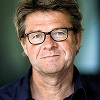 Patrick Dassen
Faculty of Humanities
p.dassen@hum.leidenuniv.nl | 071 5271646
-
Global History of Knowledge
Our team is committed to the study of knowledge in its broadest sense, encompassing both ideas and practices in all its historical variety. We look at what people regarded as knowledge, how they created, collected, circulated and used it, also why it mattered to them, and how all this was embedded in…