
MA International Relations Hosts Roundtable on Duterte’s ICC Detention and the Global Politics of Justice
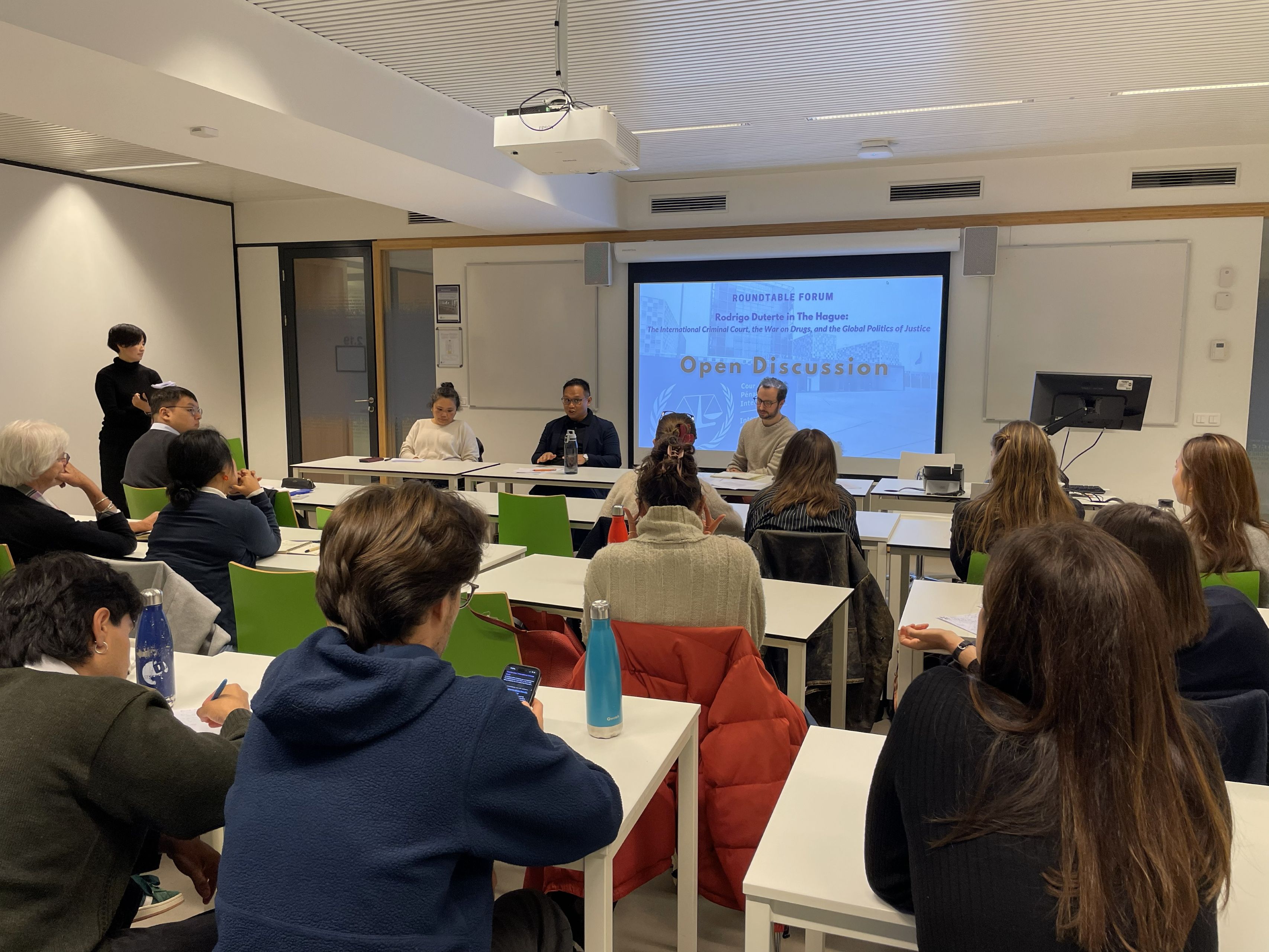
The Hague, 29 October 2025 — The MA International Relations program at Leiden University convened a roundtable forum at Leiden University The Hague Campus to examine the international and domestic stakes of Rodrigo Duterte’s arrest and detention under an International Criminal Court (ICC) warrant. Speakers emphasized that Duterte was detained pending ICC proceedings, and that the case’s significance lies not only in the question of eventual prosecution, but also in what the episode reveals about international justice, state violence, and contested sovereignty.
Duterte, who served as Philippine president from 2016 to 2022, launched a militarized anti-drug campaign associated with the extrajudicial killing of thousands of alleged drug offenders. Although the Philippines withdrew from the ICC in 2018, the Court continued its investigation on the basis that it retains jurisdiction over crimes committed while the Philippines was still a State Party. The roundtable situated Duterte’s detention in 2025 as a rare legal and political rupture in the global politics of accountability.
Organized by Dr. Salvador Santino Regilme (Associate Professor and Chair of the International Relations Program, Institute for History, Leiden University), the forum was moderated and chaired by Dr. Hitomi (Assistant Professor of International Relations, Leiden Institute for Area Studies). The roundtable featured keynote interventions by Dr. Barrie Sander (Assistant Professor of International Law, Leiden University, Faculty of Governance and Global Affairs) and Dr. Liberty Chee (International Relations scholar and global migration governance expert focusing on the Filipino diaspora), followed by an extended Q&A with participants.
In his remarks, Barrie Sander framed the Duterte case through three themes: selectivity, symbolism, and justice. On selectivity, he argued that because the ICC depends on state cooperation, international justice can become entangled in domestic political competition, pointing to how tensions between the Marcos and Duterte political dynasties may shape cooperation with the Court. On symbolism, he noted that defendants before international criminal tribunals often become “living symbols” of broader systems and thematic crimes, suggesting Duterte’s case could influence how drug-war campaigns are debated globally, including the Trump administration’s recent series of illegal lethal strikes on boats alleged to be transporting narcotics in the Caribbean Sea and eastern Pacific. On justice, Sander urged modest expectations, describing the ICC as at most a discursive entry-point that can be leveraged to catalyze wider campaigns, including those oriented toward redistributive change and resistance to punitive drug-war governance.
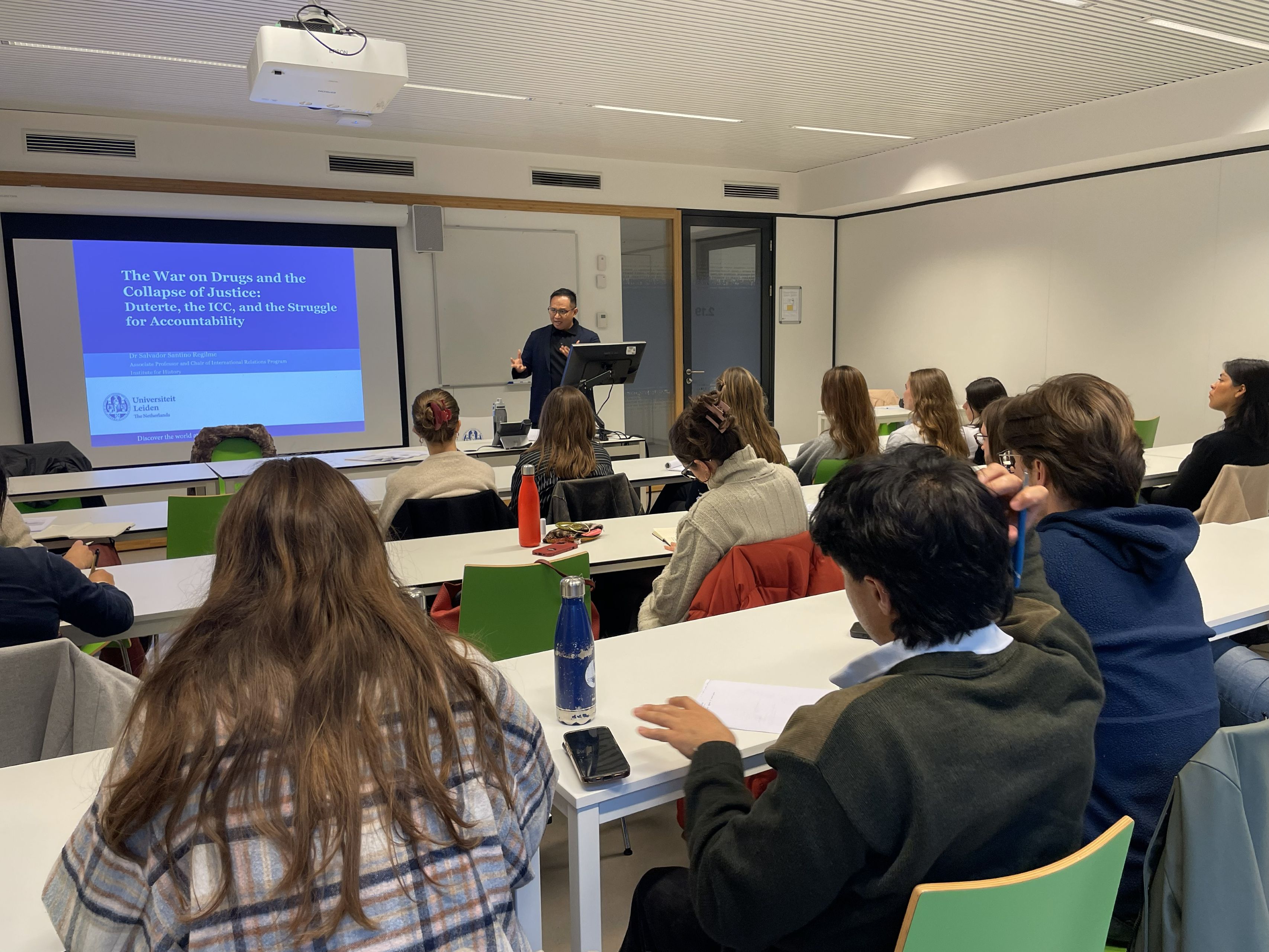
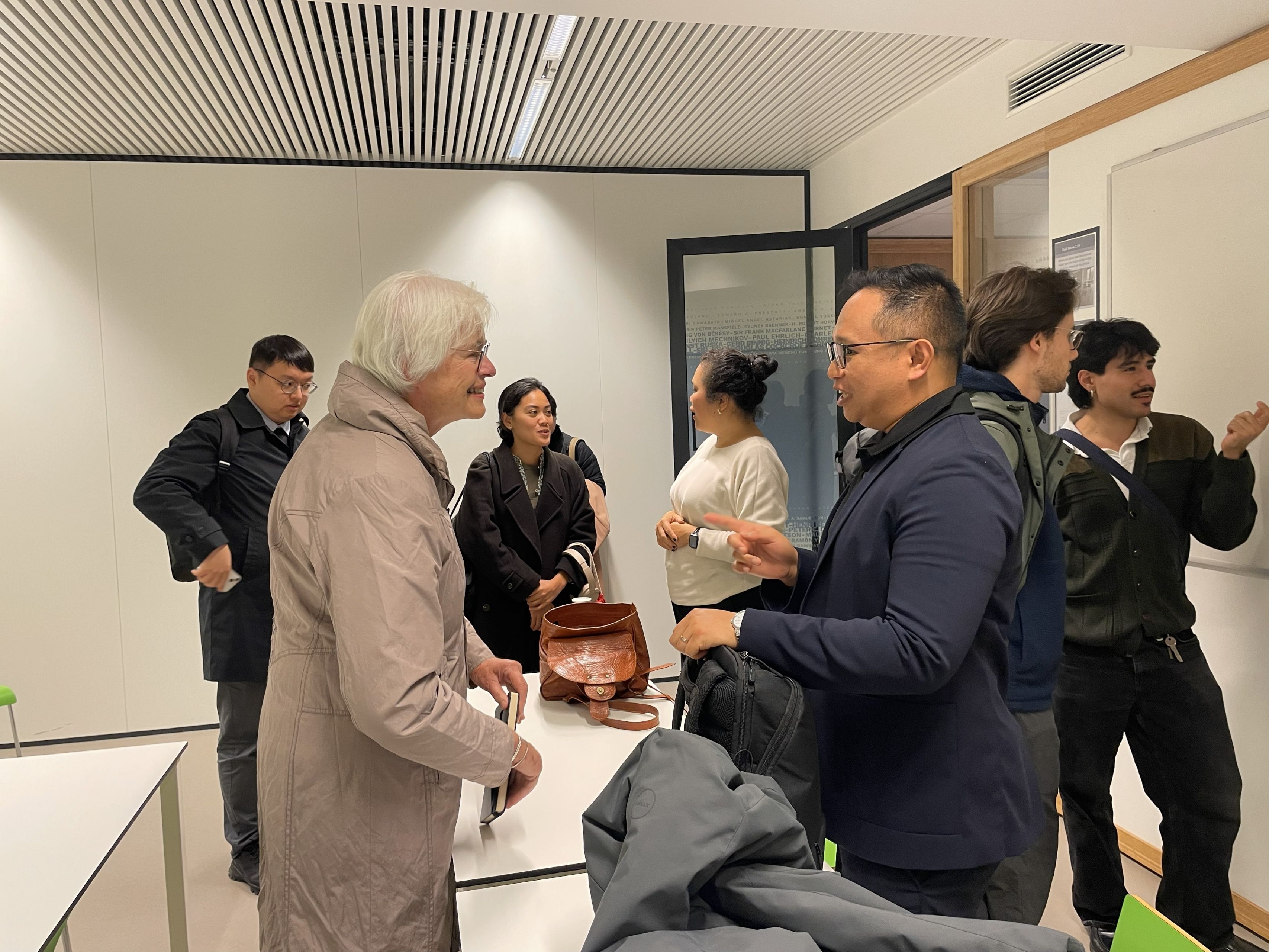
Salvador Santino Regilme argued that Duterte’s March 2025 detention should be understood as more than an individualized legal battle. He advanced four arguments: first, that violent narcotics governance in the Philippines was sustained by transnational counterterrorism alliances, legal security frameworks, and strategic silence from key partners; second, that Duterte’s sovereignty rhetoric functioned as political stagecraft that concealed dependence while resisting scrutiny, maintaining U.S. military ties while courting Chinese finance; third, that the ICC can be read as a moral archive that names atrocity, preserves counter-memory, and affirms victims’ dignity when domestic institutions fail; and fourth, that justice requires “radical accountability,” a survivor-centered approach linking truth-telling to reparations, institutional redesign, and redistribution. Regilme also acknowledged the Court’s selectivity and stressed the importance of consistent treatment, including regarding Palestine, while emphasizing that archival naming can still strengthen local justice claims and disrupt impunity.
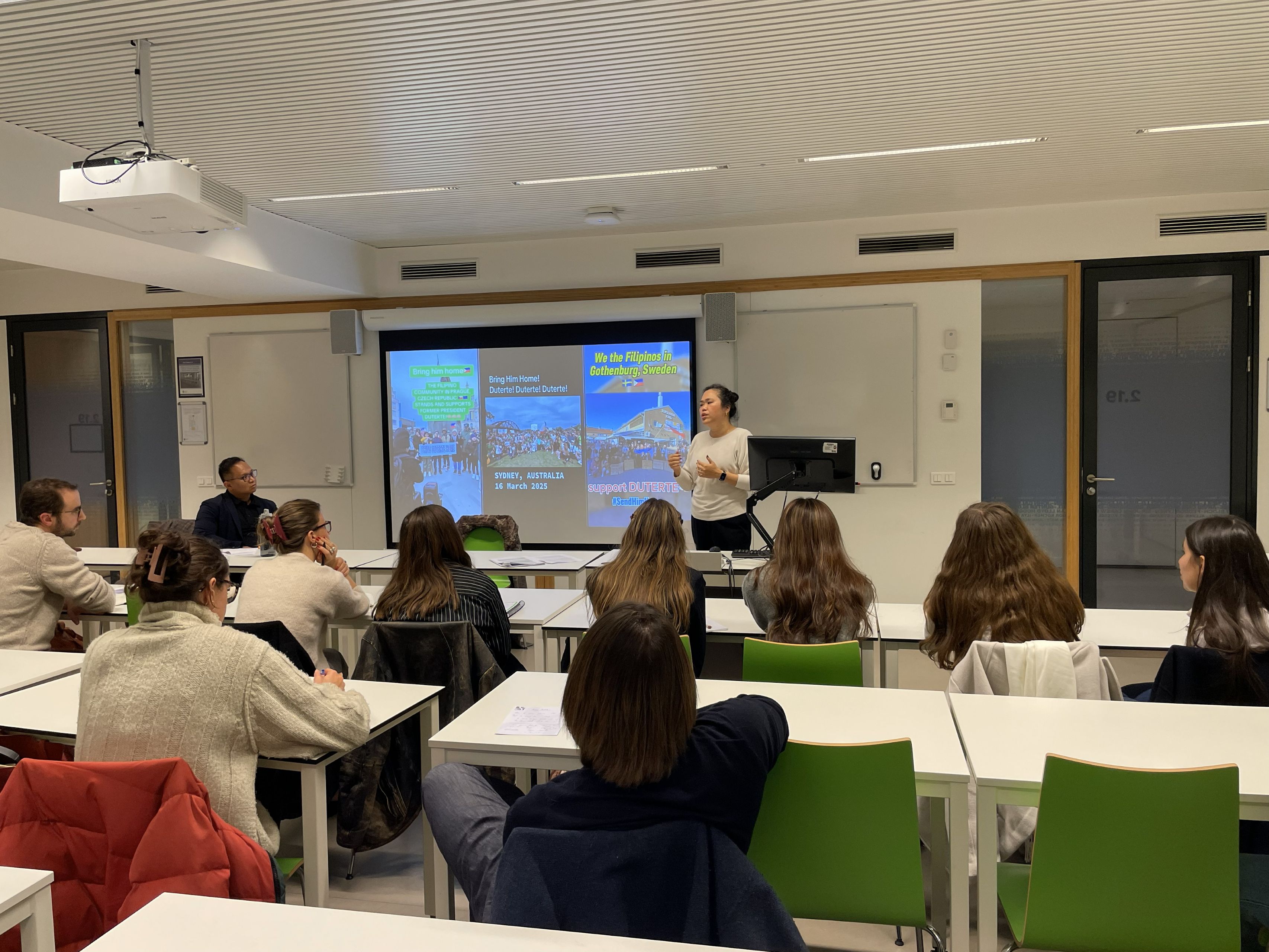
Liberty Chee examined how the global Filipino diaspora has shaped narratives around Duterte’s detention. She traced diaspora political engagement to earlier waves of exile and activism, including those who fled the Marcos dictatorship, and argued that contemporary mobilization around Duterte has often reflected a distinct agenda. Drawing on the concept of “political remittances,” she suggested that diaspora support for Duterte was mediated by migrant experiences of being overseas, perceptions of poor treatment by a foreign entity, and a longing for return. In this framing, Duterte shifted from strongman champion of Overseas Filipino Workers to a vulnerable figure in need of care, amid expressions of affection for “Tatay (father) Digong,” frequently disconnected from references to the extrajudicial killings that prompted ICC action.
The roundtable concluded by underscoring that, at this stage, the Duterte case remains defined by detention and contested pathways toward accountability, rather than a completed prosecution. For participants, the central issue was how international legal institutions operate within real geopolitical constraints while still offering, at minimum, a vocabulary and venue through which victims, survivors, and transnational publics can contest impunity.