
Max van Duijn, new chair of The Young Academy: ‘We need to be more resilient to ideological pressure’
Assistant professor Max van Duijn is the new chair of The Young Academy. He aims to support young academics, bring research closer to society and make academia more resilient.
The Young Academy is part of the Royal Netherlands Academy of Arts and Sciences (KNAW). This platform of 50 dedicated academics conducts research, provides advice, and works to strengthen the academic system.
Van Duijn speaks with infectious enthusiasm about his plans for the coming years. Together with the board and members of The Young Academy, he hopes to play an active part in several key discussions. A few of these are highlighted below.
1) Societal impact and open science
Van Duijn thinks academia should build stronger relationships with society. Many Young Academy members already devote time to civic initiatives such as Lil’Scientist, which inspires children to carry out their own research, and the ClimateHelpDesk, with researchers ready to answer climate-related questions.
‘For too long, researchers tended to limit their contact with the outside world to “disseminating” their results’, says Van Duijn. ‘But you need to seek dialogue throughout the whole scientific process.’ Although the number of initiatives that do just that is increasing, building a meaningful relationship with people from all parts of society will remain a priority in the years to come.

2) Young researchers
Van Duijn emphasises the importance of improving the position of young researchers. The phase from PhD candidate to postdoc to assistant professor can be stressful and uncertain, and researchers desperately need stability.
‘We’re also looking at how responsibilities are distributed within the different generations of academics, through initiatives such as Everyone Professor! and Profkip. Assistant professors often have a high day-to-day supervision load but depend on overstretched professors. We think these roles could be aligned more effectively.’
This also ties in with the PhD of the Future initiative, in which The Young Academy is working with the National Expertise Centre for Science and Society and PNN (the national interest group for PhD candidates) on a new vision on PhD programmes. This addresses questions such as: What are PhD candidates being prepared for? How should the remuneration structures be organised? And is the funding landscape designed for this?
It also proposes making PhD candidates’ societal contributions more visible and giving them formal recognition. ‘If a PhD candidate spends two years working in schools or works on open-source software, that should count towards their thesis in the same way scientific publications are.’
3) Technology and AI
Another key topic for Van Duijn is the role of artificial intelligence in research and teaching. AI brings productivity gains and new opportunities, but raises risks such as concentration of power and potential impacts on students’ cognitive development.
‘Sometimes you need to reject AI, whereas sometimes you need to embrace it.’
Van Duijn believes that universities need to quickly develop frameworks for responsible AI use, tailored to specific roles such as mentor, examiner or innovator. ‘Sometimes you need to reject AI, whereas sometimes you need to embrace it. As The Young Academy, we have the expertise and are eager to help guide this crucial transition – particularly for universities and research organisations.’
4) Academic freedom and independence
As chair, Van Duijn also wants to help safeguard the stability and independence of the academic system. ‘I want to strengthen collaboration internally between the humanities, natural sciences and social sciences, and externally among universities, policymakers, funding bodies and civic partners, so that we as an academic community are more able to withstand ideological or political pressure.’
He has confidence in the new Minister of Education, Culture and Science, D66 politician and former Young Academy chair Rianne Letschert. ‘Now that the stars have aligned in The Hague, we mustn’t fall into the trap of thinking that what’s happening in Hungary or the US could never happen here.’
After three years as a member of The Young Academy, Van Duijn hopes that as chair he can ensure that the voice of his generation of researchers continues to be heard. ‘And when I pass on the baton, I hope they will feel that they were listened to, and that their ideas and actions genuinely make a difference.’
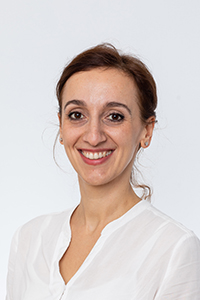
Vasiliki Kosta, an associate professor at Leiden Law School, joined the Young Academy board on 19 March. She highlights one of the platform’s main priorities: ‘Academic freedom is a key priority for us. It enables academia to achieve its goal: seeking, discovering and working with new ideas and insights in an open and free way, thus contributing to our democratic societies.’