1,196 search results for “the niet politics” in the Public website
-
In the Media
Our research regularly receives attention in the (Dutch) popular media. Here is an overview.
-
Dimensions of Free Speech: An Exploration of a New Theoretical Framework
In ‘Dimensions of Free Speech’, Devrim Kabasakal Badamchi (Leiden University Institute of Political Science) offers a new theoretical framework for free speech by critically analysing the major justifications for free speech. Kabasakal Badamchi argues for a justification: namely the double-grounded…
-
Negotiating Islamisation and resistance : a study of religions, politics and social change in West Java from the early 20th Century to the present
Chaider Bamualim defended his thesis on 9 September 2015
-
 Arco Timmermans
Faculty of Governance and Global Affairs
a.timmermans@fgga.leidenuniv.nl | +31 70 800 9500
-
to ordinary citizens: The conversion of the Baduy, ethnicity, and politics of religion in Indonesia (1977 - 2019)
Mr. Ade Jaya Suryani defended his thesis on 28 January 2021
-
The giant in the shadow? The Dutch security services in their political, bureaucratic, and societal context between 1912 and 1992
Who tried to influence the mission and position of the Dutch security services between 1912 and 1992, what effect did that have on the form and contents of the security services? How to account for transformations of the security services?
-
 Bert Koenders
Faculty of Governance and Global Affairs
a.g.koenders@fgga.leidenuniv.nl | 070 8009506
-
Why do MPs work, when their electoral survival is not at stake?
MPs in the Netherlands are first and foremost motivated by their direct environment, i.e. the parliamentary and partisan institutions.
-
Christoph Niessen
c.niessen@fsw.leidenuniv.nl | +31 71 527 2727
-
Roman Political Culture. Seven Studies of the Senate and City Councils of Italy from the First to the Sixth Century AD
This volume offers an innovative analysis of Roman political culture in Italy from the first to the sixth century AD on the basis of seven case studies.
-
Does migration lead to more political and ideological related crime?
No evidence found that increasing migration leads to an increase in politically and ideologically motivated criminality. Migration flows have, however resulted in increased polarisation in the Netherlands.
-
 Karolina Pomorska
Social & Behavioural Sciences
k.m.pomorska@fsw.leidenuniv.nl | 071 5275180
- Effatha-gebaren - Het ontstaan van een dialect in Nederlandse Gebarentaal
-
Democratic Secrecy: A Philosophical Study of the Role of Secrecy in Democratic Governance
The starting hypothesis of the project is that secrecy is not always inimical to democratic governance as conventional wisdom has it.
-
Thunderstorm: A small cultural history (1752-1830) (in Dutch)
More on the Dutch webpage.
-
Invited journalists
To complement scholarly knowledge with journalistic insights, LUCIS regularly invites journalists to share their perspective on current events.
-
China, een gids voor de 21e eeuw
China wordt steeds assertiever in zijn relaties met andere landen, maar achter dit beeld gaat een opmerkelijk diverse maatschappij en politieke realiteit schuil die tal van aanknopingspunten biedt voor samenwerking en verdere integratie van China in de wereld. In China een gids voor de 21e eeuw past…
-
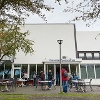 University Sports Centre
Einsteinweg 6, Leiden
-
Blarel, India-Israel at 25: Defense Ties
Why did India develop a strong military partnership with the state of Irael, after having ignored it for 42 years? How could both countries develop defense ties in spite of limited political leadership involvement? Finally, what are the prospects for defense relations as India grows to become one of…
-
Corinna Jentzsch, 'Here are 4 reasons why Mozambique isn’t a post-war success story' (blog)
Political scientist Corinna Jentzsch (Leiden University) explains why Mozambique is not (yet) a success story.
-
 Jaroslaw Kantorowicz
Faculty of Governance and Global Affairs
-
 Abhimanyu Chettri
Social & Behavioural Sciences
a.chettri@fsw.leidenuniv.nl | 071 5272727
-
Demarest, Are Nigerian lawmakers incentivised to direct public resources to their voters?
It is often said that the links between political parties in Africa and their voters are clientelist, rather than programmatic. The familiar image is that of African ‘big men’, displaying personal wealth while being respected and celebrated in the community for sharing their riches. Yet, political scientist…
-
Veenendaal, How Smallness Fosters Clientelism: A Case Study of Malta
Political scientist Wouter Veenendaal (Leiden University) provides an in-depth case study of clientelism in Malta, the smallest member state of the European Union. He reveals that not only that patron–client linkages are a ubiquitous feature of political life in Malta, but also that the smallness of…
-
Louwerse & Otjes, How Populists Wage Opposition
Populist opposition parties are less likely to engage in policy-making behaviour (participating in or directly influencing legislative production) and somewhat more likely to engage in scrutiny behaviour (monitoring and criticising government actions).
-
Mazepus, Veenendaal, McCarthy-Jones & Vásquez, A comparative study of legitimation strategies in hybrid regimes
A comparative analysis of legitimation strategies in tree hybrid regimes: Russia, Venezuela, and Seychelles.
-
The Reagan Administration, the Cold War, and the Transition to Democracy Promotion
Robert Pee, William Michael Schmidli (Eds.) This book posits that democracy promotion played a key role in the Reagan administration’s Cold War foreign policy.
-
Democracy in Europe. A Conceptual History
As one of the most influential ideas in modern European history, democracy has fundamentally reshaped not only the landscape of governance, but also social and political thought throughout the world.
-
 Stefan Thewissen
Faculty of Law
s.h.thewissen@law.leidenuniv.nl | +31 71 527 7756
-
 Hirad Rezaiejoo
Faculty of Governance and Global Affairs
h.rezaiejoo@fgga.leidenuniv.nl | 070 8009500
-
Lockdowns, lethality, and laissez-faire politics. Public discourses on political authorities in high-trust countries during the COVID-19 pandemic
This study looks at population response to government containment strategies during initial stages of the COVID-19 pandemic in four high-trust Northern European countries–Denmark, Germany, the Netherlands, and Sweden–with special emphasis on expressions of governmental trust.
-
 Jonathan London
Faculty of Humanities
j.d.london@hum.leidenuniv.nl | +31 71 527 2732
-
 Siddharth Divakaruni
Social & Behavioural Sciences
s.v.divakaruni@fsw.leidenuniv.nl | +31 71 527 2727
-
Babak Rezaeedaryakenari
Social & Behavioural Sciences
s.rezaeedaryakenari@fsw.leidenuniv.nl | 070 8009512
-
 Soledad Valdivia Rivera
Faculty of Humanities
s.valdivia.rivera@hum.leidenuniv.nl | +31 71 527 2947
-
Early Modern and Modern European History
The early modern and modern Europeanists at the Leiden Institute of History approach the past from comparative and transnational perspectives, frequently placing the history of our continent in global contexts. Our research covers the geographical and thematic breadth of Europe since ca. 1500, with…
-
Congruence between voters and parties: The role of party‐level issue salience
The level of congruence between parties and their voters can vary greatly from one policy issue to another, which raises questions regarding the effectiveness of political representation. We seek to explain variation in party–voter congruence across issues and parties.
-
The political economy of monetary-fiscal coordination: central bank losses and the specter of central bankruptcy in Europe and Japan
This paper sheds light on how better monetary-fiscal coordination can be expected to play out across very different political-economic contexts.
-
What is the role of parties in local politics?
Political scientist Simon Otjes (Leiden University) receives a grant from The Dutch Research Council (NWO). The grant is part of the SGW Open Competition XS, which aims to stimulate innovative scientific research within the Social Sciences and Humanities domain. Otjes receives the grant for his research…
-
Anouk van Vliet
Social & Behavioural Sciences
a.l.van.vliet@fsw.leidenuniv.nl | +31 70 800 9512
-
 Graig Klein
Faculty of Governance and Global Affairs
g.r.e.klein@fgga.leidenuniv.nl | +31 70 800 9506
-
Law and peace in the work of Hans Kelsen
Law and peace in the work of Hans Kelsen. A re-evaluation of Kelsen’s legal philosophy: legal pacifism as tacit meaning of his Pure Theory of Law
-
 Maartje Janse
Faculty of Humanities
m.j.janse@hum.leidenuniv.nl | +31 71 527 4167
-
Dutch election shows renewed support for pro-european politics
Dimiter Toshkov, Associate Professor at Leiden University, told CGTN Europe that the Dutch election outcome reflects growing support for pragmatic and pro-European politics. He highlights D66’s focus on education, climate policy and European cooperation as key to its strong performance.
-
New Dutch PM must look beyond national political landscape
In the upcoming Dutch general elections, the focus of the party campaigns is on national issues. Luuk van Middelaar, Professor of Foundations and Practice of the European Union and its Institutions, argues in a column in Dutch newspaper NRC that foreign policy should also be on the agenda.
-
From Wife to Presidential Partner: the Policy Agenda of the First Lady of the United States
In this article, Kuipers and Timmermans analyze the first lady's relationship with policy problems in the period 1945-2013.
-
 Christian Henderson
Faculty of Humanities
c.j.v.henderson@hum.leidenuniv.nl | +31 71 527 4995
-
 Sarthak Bagchi
Faculty of Humanities
s.bagchi@hum.leidenuniv.nl | 071 5272727
-
 Aritri Dutta
Faculty of Humanities
a.dutta.2@hum.leidenuniv.nl | 071 5272727
-
Preparing MFDEs for the Modelling World
Classical mathematical models treat space and time as a continuum, while it is sometimes more useful to regard it as granular. Hupkes is studying what this means for a number of important patterns that are often found in computer calculations and in nature.