
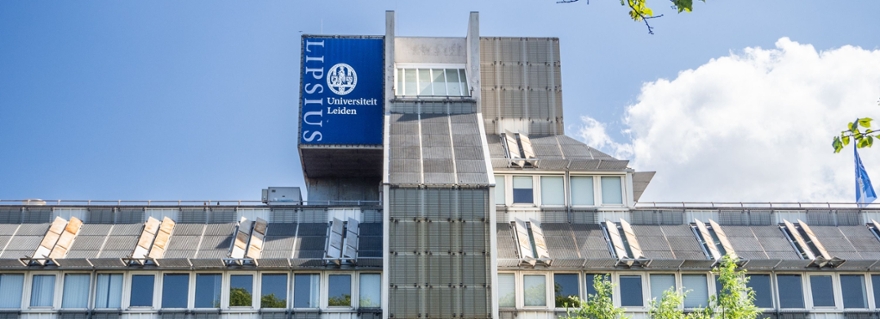
In conversation with the Faculty Board
During much of 2025, the faculty’s financial situation was the main concern. In September 2025 it became clear that a reorganisation with compulsory redundancies would not be necessary, and in December we concluded the investigation stage of the Reorganisation Code. This is now several months ago. Where are we now, as a faculty? It’s time for an update from the Faculty Board; an interview with the dean Henk te Velde and executive director Saskia Goedhard.
It’s a while since we last had a report on the faculty’s financial situation. What’s our position now?
Saskia: Since our last report, some major steps have been taken in many different areas. We’d like to share these with you, starting with the developments on the financial front. We recently closed the 2025 financial year with a positive result of M €3.5. This is great news, because our budget for 2025 assumed there would be a deficit of M € -2.6. I realise that people may have questions about this. What we’re seeing now (and this is knowledge that we didn’t have when the 2025 budget was produced) are the effects of the control measures that we introduced: they make a huge positive contribution to this result. Everyone in the faculty deserves to be complimented on this. The faculty also received additional funds from the university in the autumn of 2025. We weren’t able to spend all these funds in 2025, and they add to the positive result in 2025. They will be spent at a later date.
Henk: As Saskia said, it’s obviously excellent that we closed 2025 so positively. This was truly a combined effort. I’m incredibly impressed by the adaptability in our faculty, even though this adaptation is often very difficult. We can see that it’s had a great effect. At the same time, however, there is still the same uncertainty in the long term, and we will need to continue preparing for that. In the years ahead, the student intake will fall as a result of demographic changes. Quite simply, there will not be as many 18-year-olds, and not all of them will go to university. This will have consequences for our faculty, but as yet we don’t know the precise extent. Another important consideration is still the intake of international students; although the new government’s announcements make us cautiously optimistic, there is still much that isn’t clear. This means we need to be quite wary.
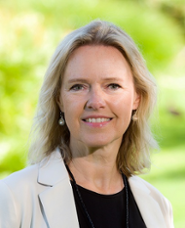
Saskia: However: we’re seeing a little more financial breathing space in the shorter term. We’re therefore working with the MTs of the institutes to develop plans for spending those funds wisely. It’s very important for us to use the money in a way that helps to future-proof the faculty. We’re also looking at how to reduce the workload, because we can see there really are problems in some places. Solutions that we’re considering include employing temporary (academic) staff, and re-introducing a sabbatical arrangement. In terms of employing temporary staff, we need to take careful account of the career prospects of the youngest generation of academics, so we’re looking at the possible options together with HR. Having more funds available will also allow organisational units with a deficit to make adjustments gradually; therefore, although they will still need to economise, they’ll be able to do this without creating unacceptable gaps. We’ll be working with colleagues in the faculty on further developing the plans in the coming months. The participation bodies will also be involved in this.
It’s just been announced that the terms of office of the dean and the vice-dean for master’s education have been extended; in other words, yours Henk and Jos Schaeken’s. What are you working on now, as the Faculty Board?
Henk: Over the past year, our task has gradually changed, from a reorganisation process to something new. In fact, you could say that a new chapter has begun. It’s great to have another year to work on this, with the Faculty Board and the faculty community, and help to restore calmness and stability in the faculty. As the Faculty Board, we’re aiming for several goals in this regard. If there’s one thing I’ve learnt in the past year, it’s that we’re an exceptionally strong faculty, with a very special position within the university, and our expertise is highly renowned both nationally and internationally. I already knew that, of course, but as the dean you see it rather differently. We need to communicate this much more effectively. We therefore recently formulated a strategic narrative, in consultation with the academic directors, and we’re going to discuss this with the Executive Board in the near future. The appointment of Luc Sels naturally means that we’ve also gained a strong advocate in the Executive Board. The narrative is a way to further develop an active lobby, asking for additional attention to the importance of all those exceptional areas of expertise and study programmes.
Saskia: We’re also working to further stabilise the faculty’s finances in the long term. Our budgets in recent years have often been quite conservative, for instance because of uncertainties about expected student numbers. This means that we’ve now built up a good reserve. We can now see that there’s scope to formulate budgets more realistically, and we can take a few more risks; however, we still need to be aware that the future is uncertain. All in all, we’re working towards a budgeting approach that makes the faculty flexible, agile and – most importantly – future-proof.
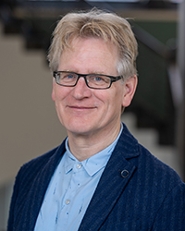
Henk: We also want to create space to give education a clearer voice in the faculty. We’ve found in recent times that this hasn’t actually been organised very well. We therefore set up a taskforce last year, with broad representation from the faculty, which recently issued advice to the Faculty Board on how to design this in more detail. We’re now considering the next steps, and more information about this will be available soon.
To conclude: I’m immensely proud of our strong faculty, with its excellent and exceptional research and education, and outstanding support departments. Let’s all try to shine the spotlight on that faculty much more. As the Faculty Board, going forward, we’d like to work on this with everyone!
If you have any questions arising from this interview, please send an email to the perspectief2028@hum.leidenuniv.nl mailbox. You can also engage in further conversation during the consultation hours: sign up by sending an email to the Faculty Board secretariat at secretariaat@hum.leidenuniv.nl. You will be most welcome!