Conference
Leiden Research Support Network Conference 2026
- Date
- Thursday 4 June 2026
- Time
- Address
-
Kamerlingh Onnes Building
Steenschuur 25
2311 ES Leiden
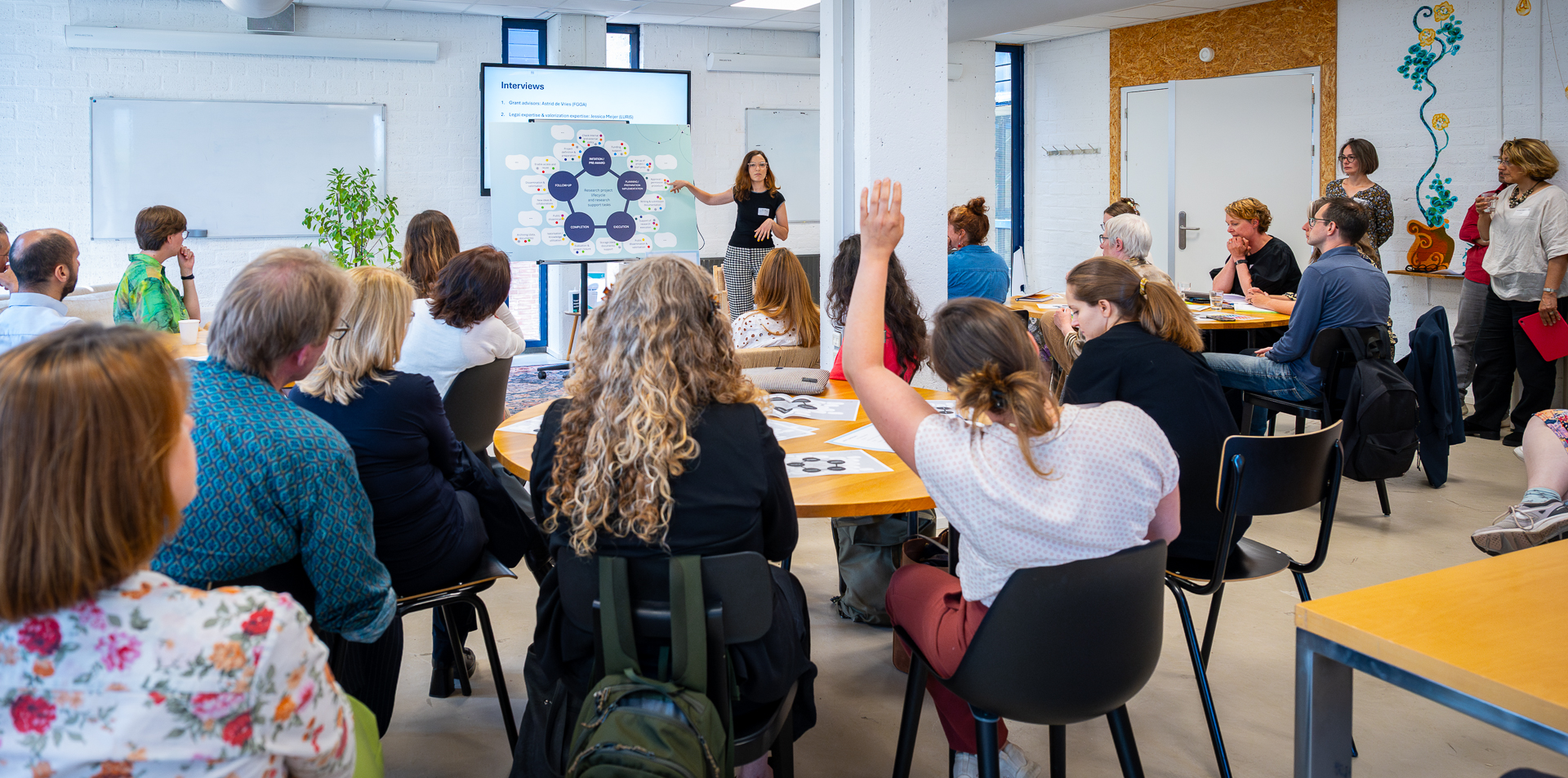
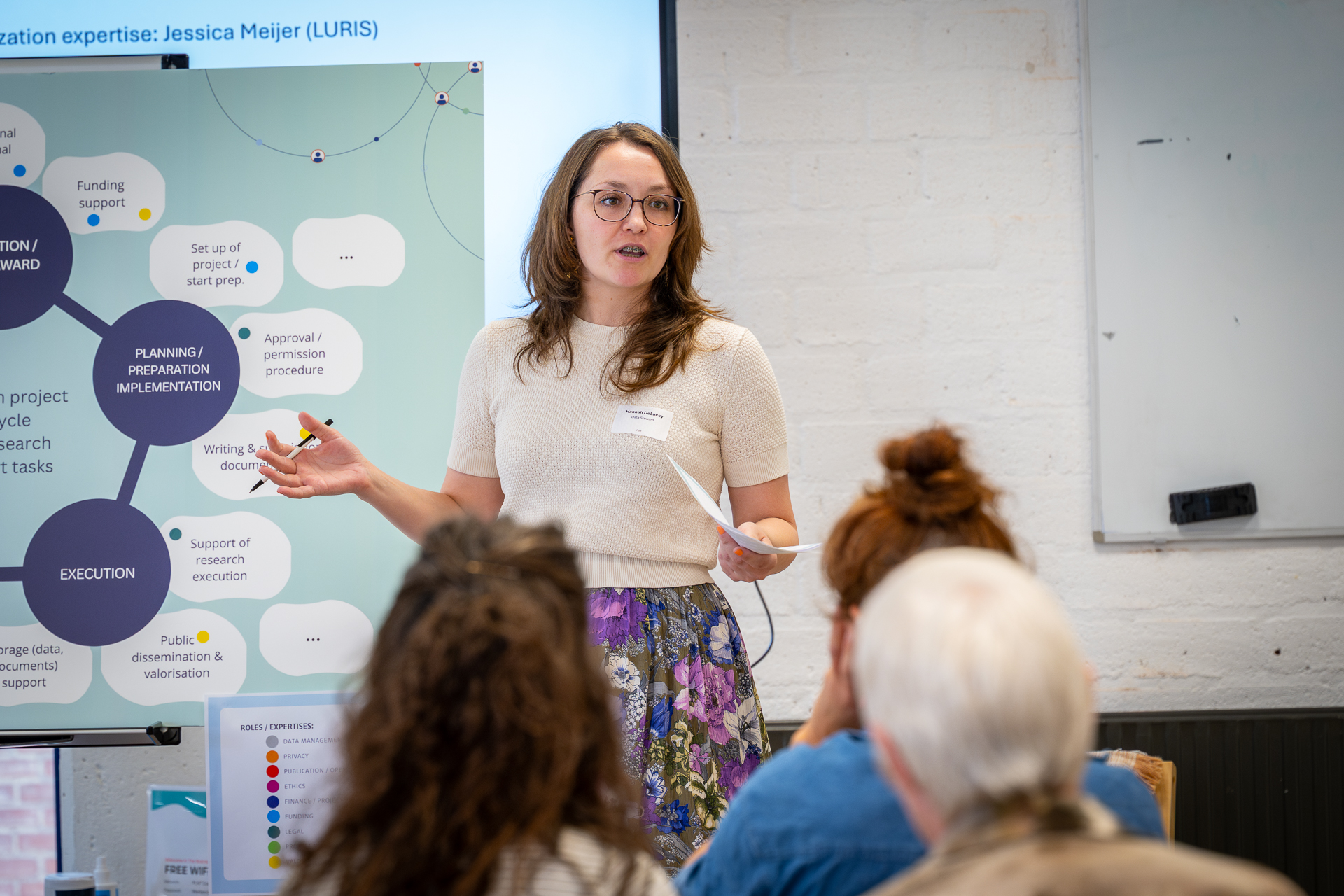
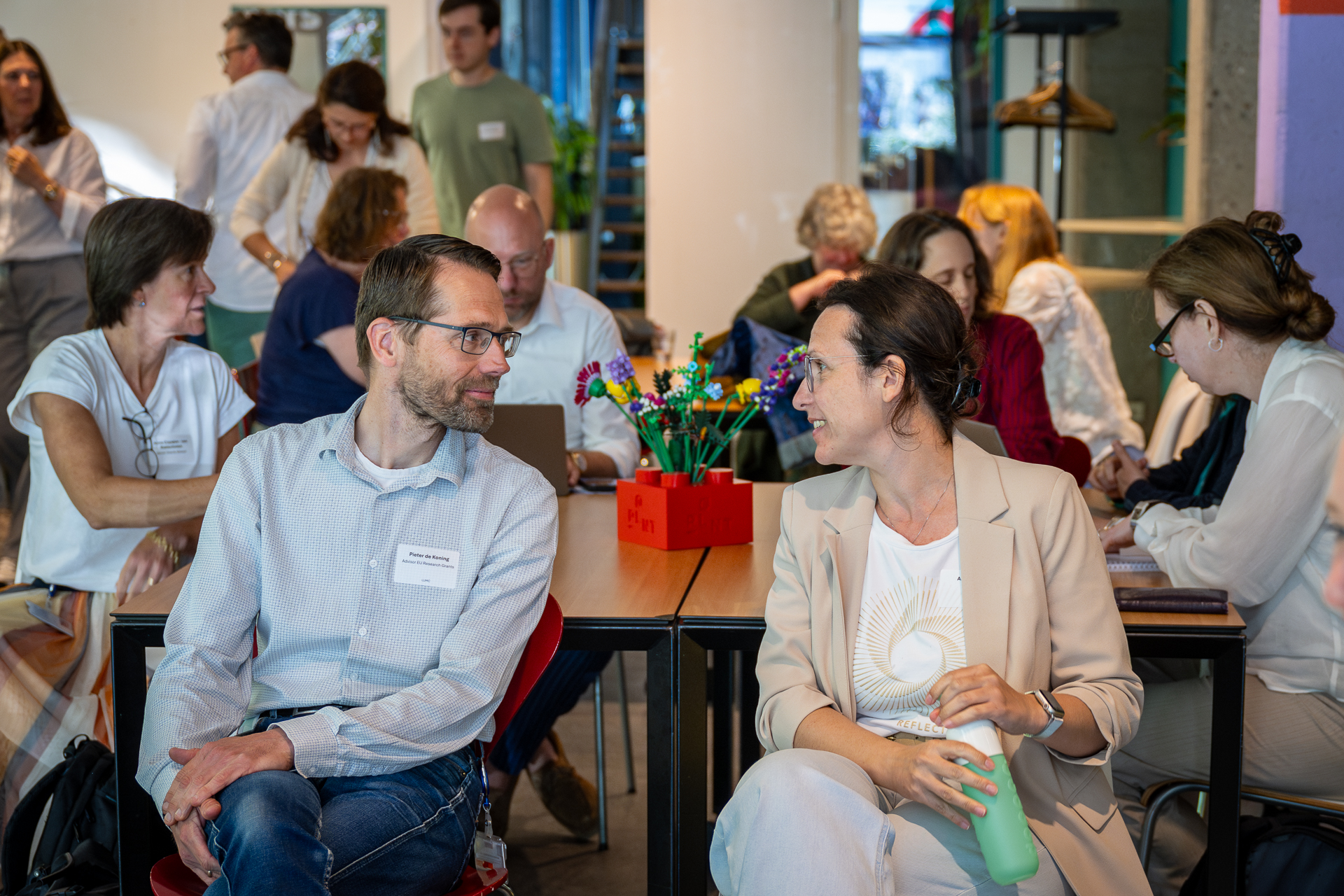
Are you a research support professional? Join us at the sixth Leiden Research Support Network Conference. This year’s theme is: working together - aligning research support roles and tasks across the project lifecycle. The theme runs throughout the programme and is particularly reflected in the exchange workshops.
Programme
- 9:00 - 9:30
- Registration
- 9:30 - 11:00
- Interactive kickoff session & welcome by Anouschka Versleijen and Luc Sels
- 11:15 - 12:30
- Break-out workshops round 1
- 12:30 - 13:30
- Lunch
- 13:30 - 15:00
- Break-out workshops round 2
- 15:00 - 15:30
- Break
- 15:30 - 17:00
- Break-out workshops round 3
- 17:00 - 17:15
- Closing remarks
- 17:15 - 18:15
- Networking drinks
Renewed workshop format
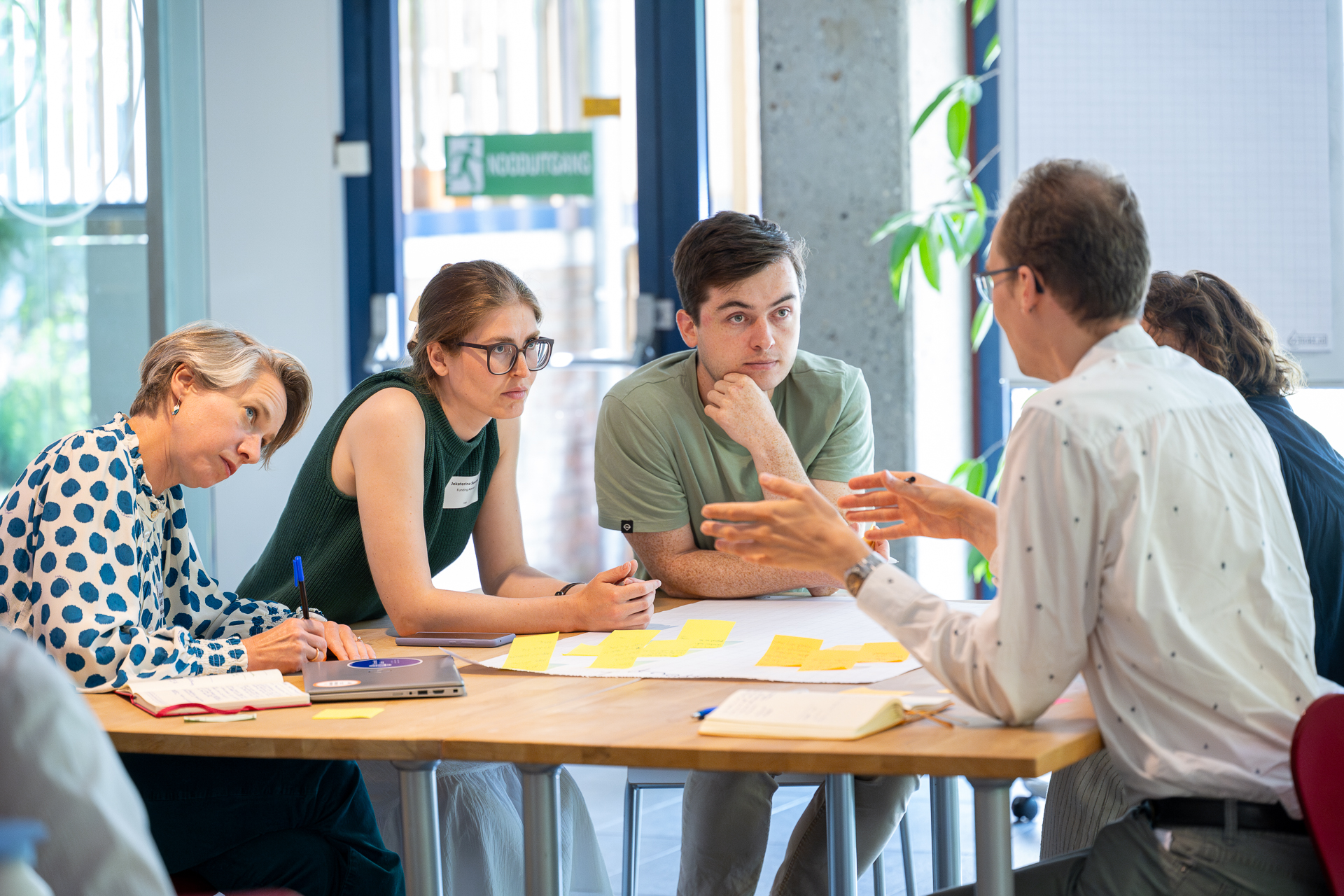
This edition introduces a renewed workshop format with three complementary tracks: learn workshops offer focused expert insights with space for reflection, exchange workshops will bring colleagues together to share practices and tackle challenges across roles and faculties, and connect workshops strengthen collaboration skills and create engaging opportunities to connect with peers across the research support community.
Break-out workshops round 1
Learn | The interfaculty themes guiding Leiden University's positioning: ready for takeoff!
Leiden University has introduced 15 interfaculty themes that will guide the university’s strategic positioning in the coming years. Through and around these themes, we will showcase and enhance our academic, societal, and economic impact.
In this session, you will learn more about the aims and expectations for the themes, as well as how they are organized and supported. As the themes are ready to take flight, many areas of expertise play a role in helping them chart their course and supporting them along in their journeys. Together we will explore how each - whether new to such interfaculty themes or building on prior experience - may contribute to furthering the themes and Leiden University’s ambitions for a future-proof positioning.
Junior and senior support staff are welcome to join. As the interfaculty themes are a new initiative, all may benefit from learning more about how they are organized. Senior colleagues may contribute relevant prior experience, which may in turn benefit and inspire junior colleagues.
Questions that will be addressed in the workshop:
- What are the aims of the interfaculty themes, and how are they organized and supported to achieve these aims?
- How can you, from your respective roles, contribute to shaping and realizing the themes’ ambitions?
- What prior insights and experiences on supporting collaborations across faculties and/or with external stakeholders can you contribute to promote the themes’ successful takeoff?
Target group: All research support staff
Facilitator: Anna Terra Verhage
Learn | Insights into legal support and the Request for Approval workflow
This workshop provides practical insights into how the Luris legal team supports researchers and support staff throughout the lifecycle of research collaborations. You will learn when and how to involve legal counsel, what types of agreements we typically handle (such as collaboration agreements, NDAs, and grant-related contracts), and how the Request for Approval (RfA) workflow facilitates timely and compliant contract approvals. For example, early legal involvement can help avoid delays when negotiating IP clauses in a collaboration with an industry partner, or ensure proper risk allocation in a consortium agreement.
This session is relevant for anyone involved in initiating or managing research projects who wants to navigate legal processes more effectively. Participants will learn how and when to involve the Luris legal team to keep research projects running smoothly and avoid last-minute hurdles. We will give a clear overview of the agreements we handle and share practical tips on key topics like IP, publication rights, and collaboration terms. You will also gain hands-on insight into the RfA workflow, helping you secure approvals more efficiently. The workshop is particularly useful for junior support staff as an introduction, while more senior experienced colleagues may benefit as a refresher or to gain new insights.
Target group: Project management, Project control, Knowledge transfer, Research funding
Facilitators: Luris legal team: Kim Grogan, Myriam Pahud de Mortanges, Aimée de Heij and Giuseppe Visimberga
Learn | Between advice, compliance and ethics deliberation: how do ethics committees support responsible research
Is it ethical to conduct LGBTQ+ online survey research in a country where homosexuality is illegal and punishable by law? Should researchers be allowed to conduct interviews with refugees regarding their traumatic life experiences within three months after arriving in The Netherlands? These are the kind of questions and dilemmas that an ethics committee are required to address before and during an ethics review.
In this workshop we will look at how and why ethics committees are playing an invaluable role to advise, guide and make ethical review decisions on complex and challenging studies and research contexts, as well as to support research in addressing ethical dilemmas during the execution of a study. Participants can expect to gain insights and a deeper understanding of ethical decision-making in the context of research involving human participants and/or their data.
The workshop will provide valuable insights to both junior and senior research support staff. Colleagues who are new to the field of research management will gain insight in the role, function and activities of ethics committees, while more experienced persons will gain further insight into the complex factors that underpin ethics advice, guidance, decisions and deliberations.
Questions that will be addressed in the workshop:
- How does an ethics committee effectively support and facilitate research involving human participants and/or their data?
- What are the principles and guidelines that guide effective ethics reviews and deliberations?
Target group: Project management, Data stewardship / Open access, Ethics, All research support staff.
Facilitators: Braam Hoffmann, Manon Osseweijer
Learn | Open Access: Strategies for research support professionals
Strategic thinking about communicating and publishing research results is becoming increasingly important amid a rapidly expanding landscape of publication channels, evolving recognition‑and‑rewards systems, open‑access requirements, budget cuts, and geopolitical pressures affecting knowledge security and academic freedom. Researchers often struggle to balance costs, restrictions, and stakeholder demands when choosing how and where to publish.
This workshop explores how research support staff can assist at each stage of the research cycle, introducing Leiden University’s recently adopted Strategic Publication Framework, which outlines values and criteria for making decisions about research outputs. Through practice‑based dilemmas, participants discuss how this framework relates to their work and experience how they can support strategic decision‑making in their own projects, departments, or roles.
You will gain familiarity with the framework and learn how to translate values and criteria into specific contexts. You will develop sharper perspective‑taking skills through dilemma conversations, and useful peer exchange. The concrete dilemmas make the workshop accessible for junior support staff while still offering depth for senior colleagues. Anyone wanting to learn more about this new university policy is warmly encouraged to join.
Questions that will be addressed in the workshop:
- What values and criteria should researchers consider when publishing their work?
- How can research support professionals assist in these strategic considerations?
Target group: All research support staff
Facilitator: Fleur Praal
Break-out workshops round 2
Connect | Slimmer digitaal samenwerken & communiceren met Microsoft 365 (Nederlands)
Digitale samenwerking is een vast onderdeel van ons dagelijks werk, maar het kan al snel overweldigend worden door eindeloze e-mails, verspreide bestanden en informatie die moeilijk terug te vinden is.
In deze workshop leer je praktische trucs om je werk beter te structureren met de Microsoft 365‑apps die je al gebruikt, zodat je efficiënter en met meer plezier kunt werken. Samen met een MS365‑expert breng je de universitaire basisprincipes voor slimme digitale samenwerking direct in de praktijk. Met je eigen laptop ontdek je welke tools je waarvoor inzet, hoe je gedeelde bestanden logisch organiseert en hoe je duidelijker communiceert via chat, posts en e‑mail. Je leert ook hoe je binnen je team slimme afspraken maakt die samenwerking stroomlijnen, ruis verminderen en iedereen op één lijn houden. Deze hands‑on sessie is de volgende stap naar slimmer, rustiger en effectiever digitaal samenwerken en communiceren.
There will be a repeat of this workshop in English in workshop round 3
Target group: all research support staff
Facilitator: Timo Keijzer of AVK Training & Coaching
Exchange | Making data management, privacy, and ethics documents findable
In the workflow of research data management planning, privacy checks, and ethics reviews, there are many relevant documents, such as faculty and institute data protocols, data management plan templates, and DPIA templates. However, it can be hard to find these as well as to know what the latest or correct version is. Documents are available through the website, through Sharepoints, on Zenodo, and so on.
In this workshop you will explore the different options for sharing and storing documents, their pros and cons, and best practices. You will learn how to share your documents in a way that hey are findable for other research support staff and where applicable researchers.
Facilitators: Pascal Flohr, Braam Hoffmann, Ellen Touwen and Céline Richard
Connect | Social activity – come for the games, stay for the connections!
Join this interactive conversation game and explore how research support roles connect across the research project lifecycle. Through Research Support Stories, participants take part in playful and meaningful conversations about collaboration, communication, bottlenecks, shared expertise, and everyday practice within research support.
Using a custom-designed conversation card game and a rotating lifecycle wheel, participants work in small groups to explore different phases of the research lifecycle together. Conversation cards focused on reflection, friction, connection, and action invite participants to share experiences from their own professional perspective and discover how different roles contribute across phases and domains.
The session is designed to strengthen connections within the research support network, lower the threshold for future collaboration, and create space for practical conversations that continue beyond the conference itself. Expect interaction, recognition, new perspectives, and shared stories from across the network.
Target group: all research support staff
Facilitator: Jasmijn Mioch, Creating Sessions
Exchange | The ‘Project Team Approach’ for the preparation of collaborative projects
Preparing a proposal for a collaborative project - as the coordinating researcher - is practically a full project in itself. It places heavy demands on the researcher, while support staff often try to help without having all the necessary expertise at hand. And all too often, a highly complex question arrives with no context… the day before the deadline. How can support staff help researchers organise the proposal‑writing process without ending up in a pressure‑cooker situation?
In this workshop, we explore a collaborative, cross‑domain support model for large proposals: the project team approach. We will learn from a best‑practice example (NWA‑ORC) and possibly a “worst‑practice” case from a lumpsum project. After the workshop, participants will have a clearer understanding of the phases involved in preparing a collaborative project proposal and the support expertise needed at each stage.
Target group: All support staff that have a role in the initiation / pre-award phase, so far identified: data steward, privacy officer, open access team, ethics secretary, project controller, funding advisor, legal counsel, project manager, business developer.
Facilitators: Anke Klerkx, Jip Chong, Nina Hefele
Break-out workshops round 3
Connect | Smarter digital collaboration & communication with Teams, Chats & E‑mails (English
Digital collaboration is an integral part of our daily work, but it can quickly become overwhelming with endless emails, scattered files, and information that’s hard to find.
In this workshop, you will learn practical tricks to structure your work more effectively using the Microsoft 365 apps you already use, enabling you to work more efficiently and with greater enjoyment. Together with an MS365 expert you will put the university’s basic principles for smart digital collaboration directly into practice. Using your own laptop, you will explore which tools to use for which purpose, how to organise shared files logically, and how to communicate more clearly through chat, posts, and email. You will also learn how to make smart team agreements that streamline collaboration, reduce noise, and keep everyone aligned. This hands‑on session is the next step toward smarter, calmer, and more effective digital collaboration and communication.
Target group: all research support staff
Facilitator: Timo Keijzer of AVK Training & Coaching
Exchange | Connecting the Dots: practical ways to support inter/trans-disciplinary research across the project cycle
Interdisciplinary and transdisciplinary research are strategically important, yet support structures are often organised around disciplinary and linear project models. As a result, support staff may enter too late, work in silos, or unintentionally reinforce weak project designs not due to lack of expertise, but due to timing and fragmentation across the project cycle.
This session focuses not on changing structures, but on articulating a shared way of working by drawing on the collective experience of research support staff. Together, participants will develop a set of best practices and practical strategies to strengthen support for ID/TD projects. By the end of the session you will:
- understand how ID/TD challenges manifest across the project cycle;
- identify where their role tends to enter too late or too narrowly;
- practice role‑appropriate early interventions;
- co‑create shared support principles that span the full cycle and
- leave with one personal commitment linked to their own phase in the cycle.
The workshop benefits both junior and senior colleagues: junior staff gain a clearer view of how large collaborative projects function beyond formal procedures, helping them recognise when and how to involve others, while senior staff make their often tacit coordination strategies explicit, reflect on where routines may create inefficiencies, and align expectations across units.
Target group: All research support staff
Facilitators: Lea Kodeih
Connect | Vidatum in Practice - Established post‑award workflows and upcoming pre‑award features
In this workshop, you’ll get a clear and practical overview of Vidatum, Leiden University’s research management tool. We begin with a short update on recent developments, followed by a demo of the new pre‑award functionalities with room for questions. Next, we explore post‑award workflows, upcoming improvements, and what these mean for your projects supported by real experiences from a project controller. The session concludes with an open exchange where participants discuss familiar situations and ask further questions.
Target group: all research support staff
Facilitators: Tom de Jong, Jip Chong
Exchange | Project Wrap-Up and Beyond: project completion and follow-up made simple
This workshop supports research staff in navigating the final stages of the research project lifecycle, with a focus on completion and follow-up. These stages are crucial for ensuring smooth project closure and lasting value, yet they often present challenges such as poorly archived datasets or a lack of structured plans to share results beyond the research team.
The session offers practical approaches to project closure, knowledge transfer, and impact follow-up, helping participants turn completed projects into well-documented, shareable, and reusable outcomes. Participants will gain a clearer sense of what “good” project closure looks like, what commonly goes wrong, and how to address typical sticking points more smoothly. The workshop also highlights how to embed knowledge transfer as a natural step rather than an afterthought, so results are not lost once a project ends. The session concludes with a wrap-up of key insights and practical takeaways. Junior staff will gain hands-on guidance on supporting project closure and knowledge transfer, while senior colleagues will benefit from sharing experiences, comparing approaches, and reflecting on what works in practice.
Question that will be addressed in the workshop:
- What does a good project closure look like in practice for support staff?
- How can we make knowledge transfer easier and more consistent?
- How can we turn completed projects into new opportunities or collaborations?
Target group: this session is ideal for research support staff who want to enhance their role in the final project stages and help ensure sustainable project outcomes and real‑world impact.
Facilitators: Sara Cigna, Mariana Avalos Garcia
About the conference
The Leiden Research Support Network Conference brings together colleagues from across the university to share knowledge, best practices, and innovations in research support. This annual event is an opportunity to connect, learn, and collaborate on topics that strengthen our research ecosystem.
Who’s organising this event?
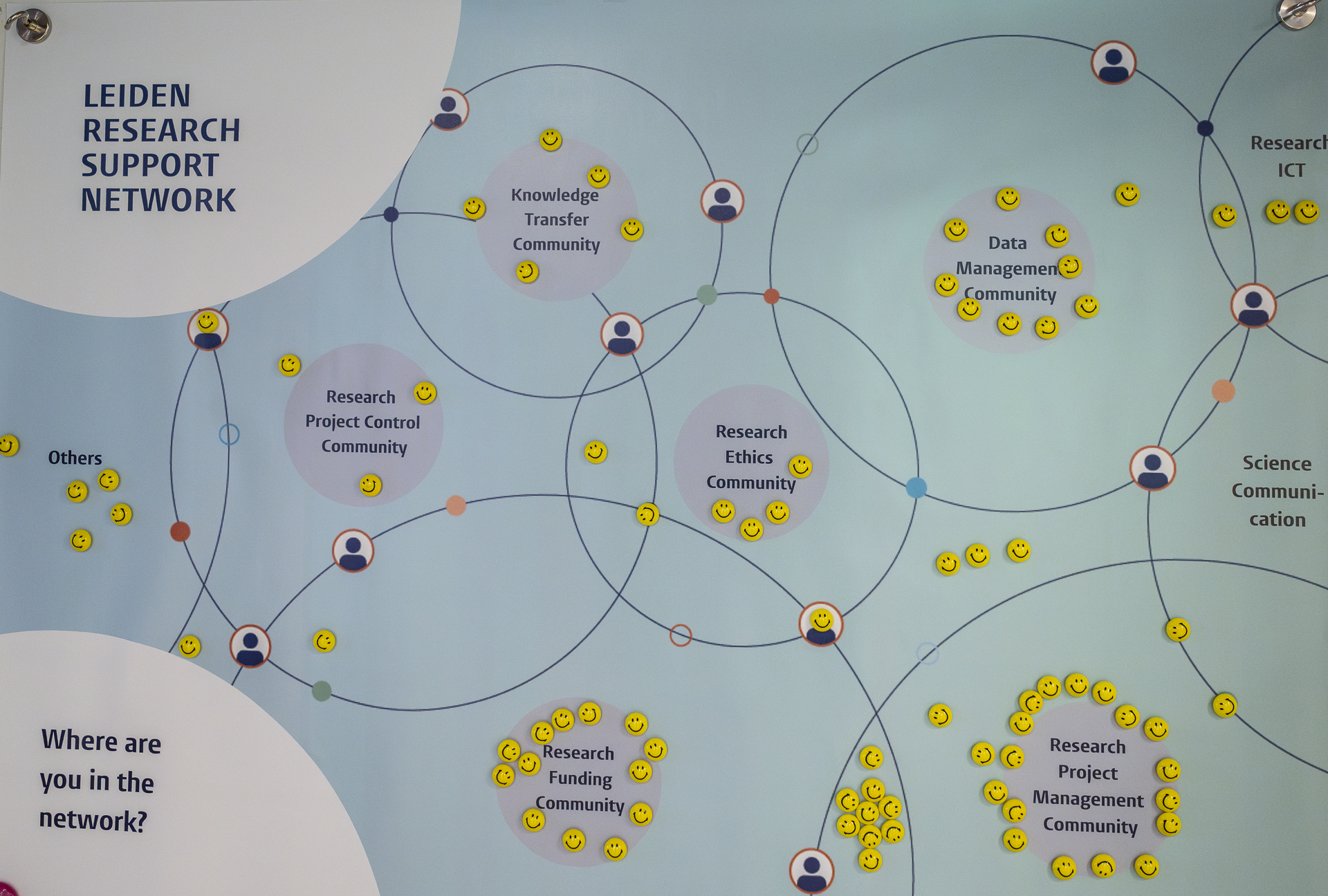
This event is organised by the Leiden Research Support Network. The network is for all research support professionals working at Leiden University. Within the network, research support professionals from different domains exchange knowledge and experiences, and work together to answer (complex) questions from researchers. Questions? Please contact: lrs@luris.nl.