
AIVD Director Akerboom in conversation with students: 'Russia is the most urgent threat'
During the second Arthur Docters van Leeuwen Lecture on 1 December, Erik Akerboom, Director General of the AIVD, underlined how the changing threat landscape demands reflective leadership, transparency where possible and close cooperation to protect the democratic legal order.
A tribute to Arthur Docters van Leeuwen
Akerboom explained that many of the concepts used by the AIVD today stem directly from the work of Docters van Leeuwen. He introduced a risk-based approach in which threat, national interest and resilience are always assessed together. This analytical framework is still used to this day. Akerboom stressed that Docters van Leeuwen also played an important role in promoting greater openness of the service.
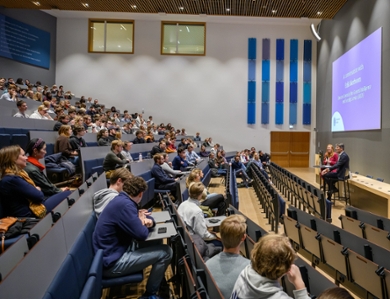
The annual Arthur Docters van Leeuwen Lecture is an initiative aimed at engaging senior intelligence leaders in dialogue with students about the work of intelligence and security services. This was the second edition of the series, reflecting on leadership within intelligence organisations, with particular attention to the role of intelligence in a democratic legal order.

Strategic thinking in a changing threat landscape
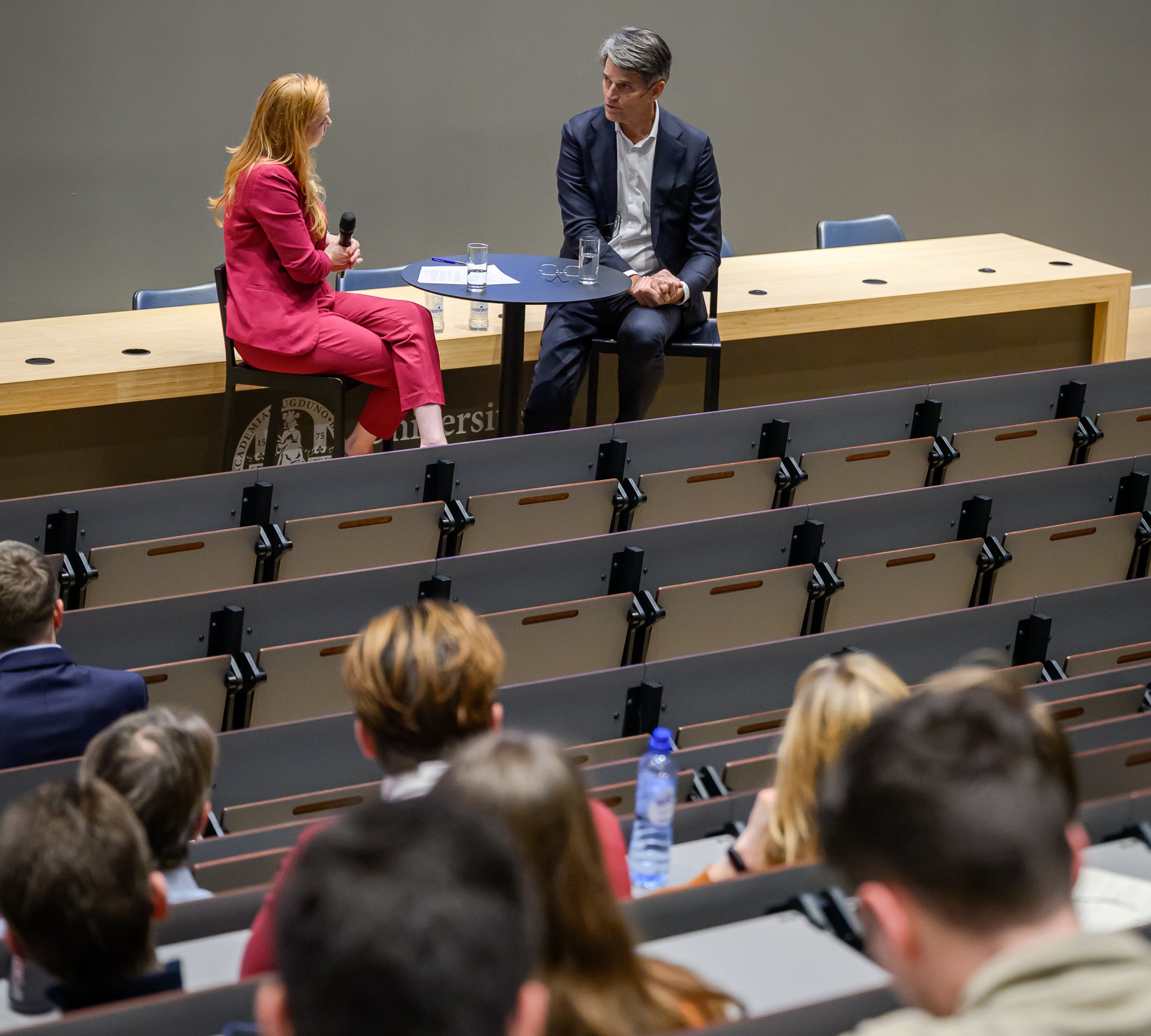
During his lecture, Akerboom spoke with Willemijn Aerdts, an expert on intelligence and security services at Leiden University. The Director General outlined how the work of the AIVD has changed over recent decades and noted that cooperation with the MIVD has intensified across several domains. According to Akerboom, this close cooperation is necessary for understanding and countering modern threats.
He stressed that threats rarely exist in isolation. ‘Russia currently forms the most urgent threat, because it is close by and the conflict takes many forms. It is an economic conflict, a military conflict, a global conflict and a political conflict. At the same time, many other threats remain.’
Akerboom emphasised that multiple threats now reinforce one another. The threat from China and other state actors, terrorism, criminal subversion and counterespionage continue to demand sustained attention from the services.

Reflective leadership as a necessity
A recurring theme in his remarks was the importance of reflection. Akerboom referred to the value the AIVD attaches to evaluation during and after operations. He argued that mid-operation reflection is crucial for making rapid adjustments when circumstances demand it.
According to Akerboom, this ability is becoming increasingly important. ‘Those who can adjust their approach while acting remain ahead of their adversary.’ He illustrated this with examples drawn from the service’s technical teams, which must respond rapidly to digital threats that develop at great speed.
Openness and trust as conditions for success
In line with the vision of Docters van Leeuwen, Akerboom emphasised the need for openness wherever possible. Transparency not only helps to increase public understanding of the AIVD’s work but also strengthens the trust that is crucial to the work of the service.
He underscored the importance of an independently operating service that communicates from the perspective of protecting national security.
(European) cooperation as a renewed foundation
Akerboom underlined the importance of cooperation within government and also with the private sector and the academic community. In the context of research into criminal subversion, the AIVD and the police now examine more closely how they can reinforce one another, each within its own legal mandate. International cooperation with partner services also remains essential. According to Akerboom, the key conditions for success lies primarily in personal relationships and the trust people have in one another.
He explained that the current international situation has led the AIVD to focus even more intensively than before on cooperation at the European level. ‘Those who are at the front row rather than at the back can exert influence and are attractive partners for cooperation. A key element of cooperation is that, as a service, you have something to offer – and we do.’
A call to the next generation
Akerboom concluded by addressing the students and researchers present, emphasising the importance of the democratic legal order and their role in defending it. Asked what advice he would give students considering a career in national security he replied: 'We must recognise that we have something worth protecting. The democratic legal order is under threat and must be safeguarded. Defending it gives real meaning to your professional life.'
-
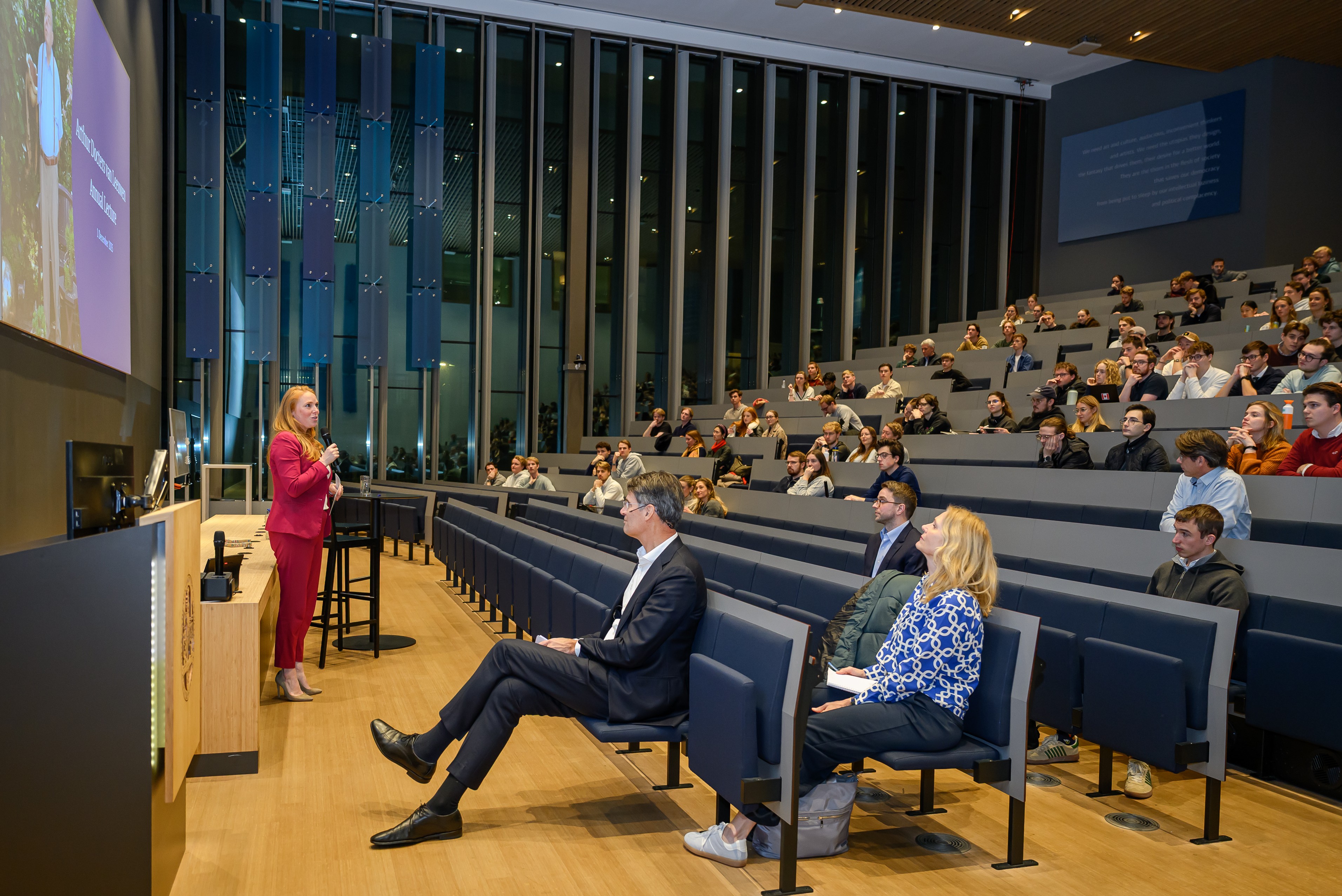
A full auditorium in Wijnhaven -
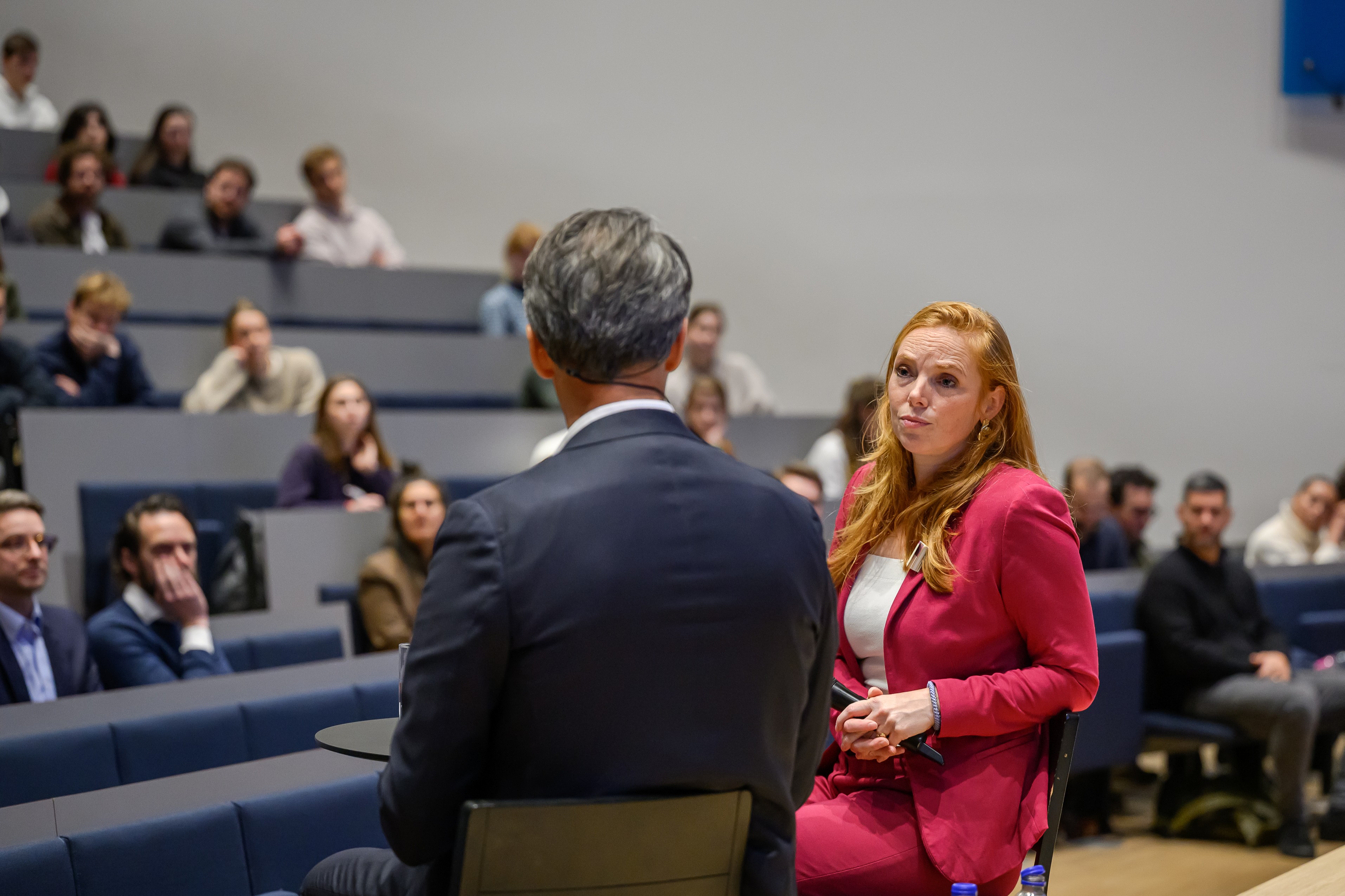
Willemijn Aerdts led the conversation -
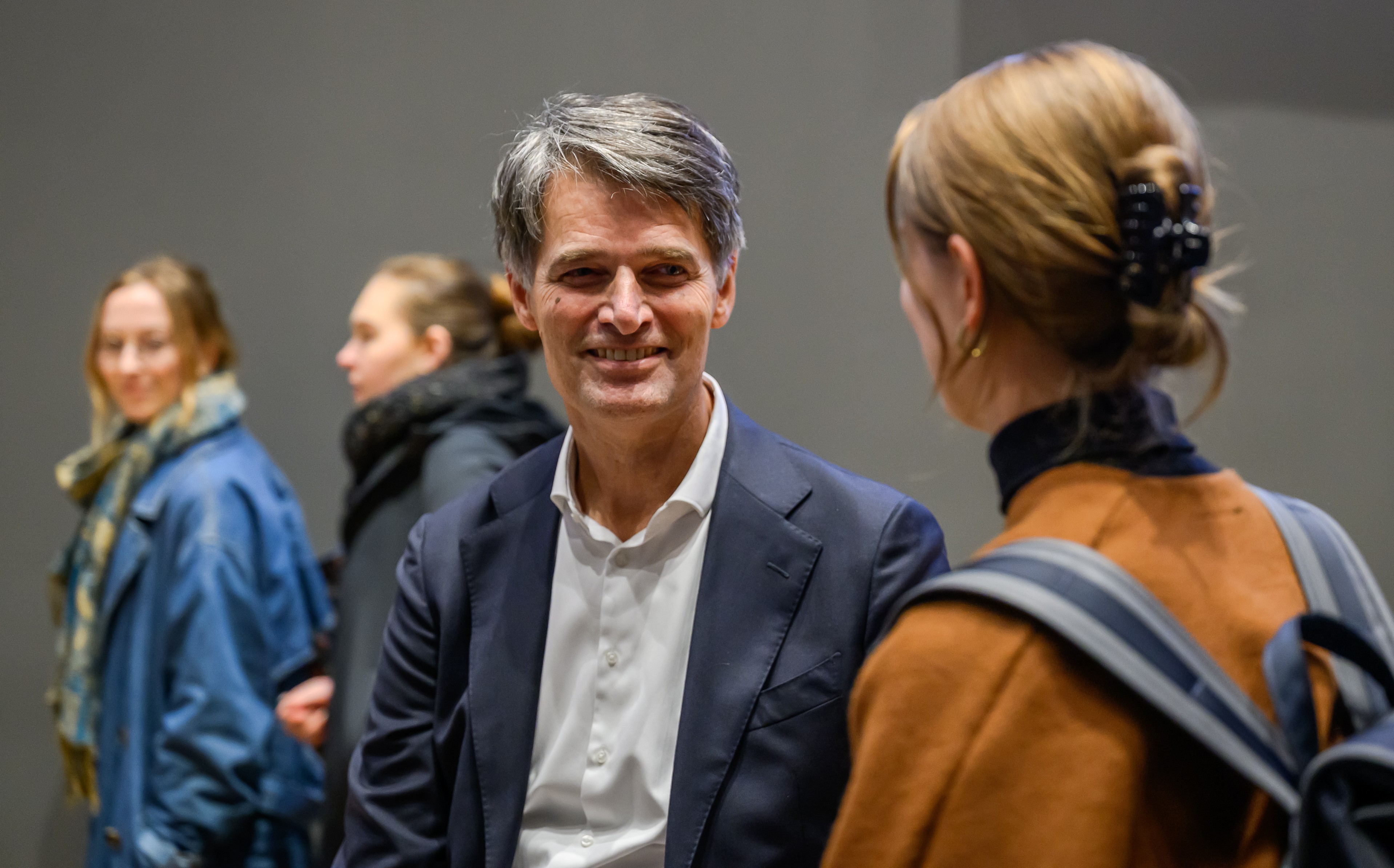
Erik Akerboom in conversation with students -
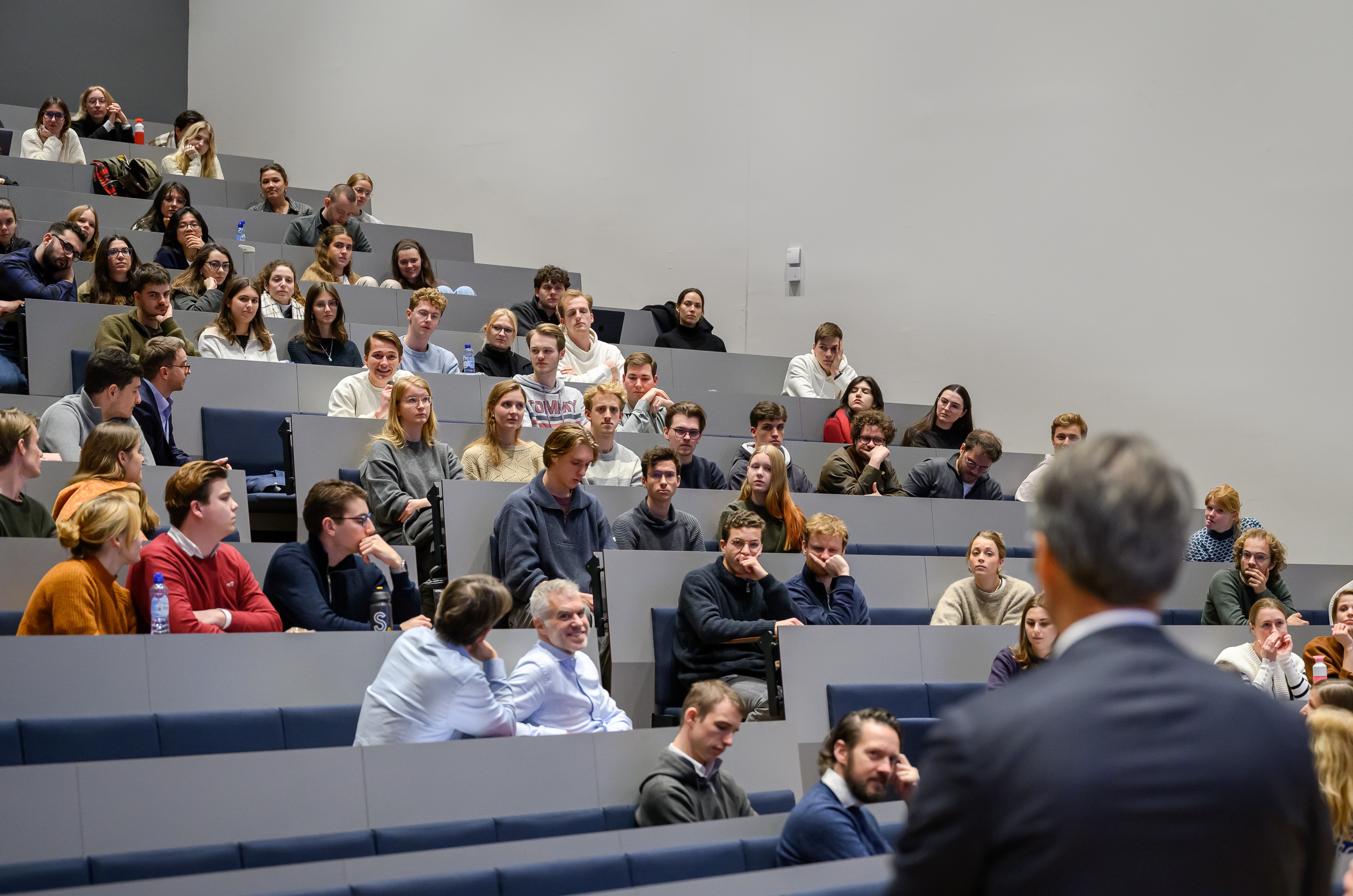
Students asking their questions -
'Those who can adjust their approach while taking action stay ahead of the adversary'
Text: Niels Heukelom
Photos: Arash Nikkhah