COIn grants awarded to improve research infrastructure
Several FGW projects have received a COIn grant. This grant, ranging from 5,000 to 30,000 euros, is intended to improve research infrastructure, for example by purchasing software licences, applications, electronics or laboratory equipment.
COIn Grant 2026
Next year, there is once again a grant available for research infrastructure. The deadline for applications is 1 March 2026.
Mobile recorders for linguistic fieldwork - Marian Klamer
At Leiden University we are famous for our research on languages and cultures from across the world. Thanks to a recent COIn grant, we were able to increase the number of fieldwork kits we have available for our researchers. Such a fieldwork kit consists of a small backpack containing audio and video recording devices, a large and a small tripod to mount these devices, an external microphone, extra sets of rechargeable batteries, extra SD cards, and extension cables. As cameras and audio devices are relatively bulky and fragile in field situations while mobile phones are light, small, and more sturdy, we are now running a pilot where we use mobile phones to collect video and audio field data, both with and without external microphones. Hence, the COIn grant helps us to expand our inventory of kits, and at the same time to innovate them using new devices that will be more portable and sustainable for work in the field.
For all inquiries, including requests to borrow equipment, you can drop an email at lucl-labs@hum.leidenuniv.nl.
Social and Political Histories of the (Post-) Ottoman World – Alp Yenen en Mehmet Kentel
The textual heritage of the late Ottoman world is notoriously difficult for researchers to access. Ottoman Turkish printed documents are scattered across present-day borders, institutions, and collections across the Balkans, the Middle East, and North Africa, often hindered by restricted access, preservation, and limited digitization. Thanks to the COIn Grant, researchers at Leiden University studying the modern Middle East will gain significantly improved access to the vast collections of Ottoman Turkish periodicals and books. With AI-assisted tools, they will be able to conduct keyword searches in Turkish and English, across Arabic and Latin scripts, and uncover visual and semantic connections between different publications—all without leaving their offices. This enhanced access will facilitate more nuanced and critical historical scholarship, highlighting the Ottman world’s cultural and linguistic richness.
Advancing Speech Research with New Lab – Jueyu Hou, Rint Sybesma en Tim Laméris
Thanks to a COIn grant, LUCL Labs have recently been upgraded with state-of-the-art equipment to advance research in speech sciences. Researchers now have access to high-end headphones, microphones, and a modern mixing console, enabling precise recording, monitoring, and processing of speech signals.
The initiative for the upgrade was initiated by PhD candidate Jueyu Hou, who is supervised by Prof. Rint Sybesma and Dr. Tim Laméris. In her research on the pitch patterns of Mandarin Chinese words produced by native speakers, these upgraded facilities play a crucial role as they allow long-duration recording sessions to be carried out smoothly and accurately.
We are committed to fostering collaborative research and warmly welcome all colleagues to explore the new lab facilities at Lipsius 1.04-1.12. Access can be arranged on the LUCL Labs SharePoint. If you have any questions, please contact us at lucl-labs@hum.leidenuniv.nl.
The Mobile Mocap Lab: Building a Portable Motion Capture Toolkit for Naturalistic Motion Research – Victoria Nyst
Understanding how people move, sign, and gesture in real-life contexts is central to studying human communication — and increasingly important as AI systems move toward multimodal understanding, integrating language, vision, and movement.
The COIN-funded Leiden Mobile Mocap Lab has taken its first concrete steps. The project’s goal is to create a portable and flexible motion capture setup that makes it easier to study sign language, gesture, and other forms of embodied, multimodal communication and interaction.
Once the system has been tested, we’ll share guides and demo materials and open the setup to other researchers. Our long-term aim is to make this infrastructure available across the university and to connect it with ongoing work in human-centered AI, language and gesture research, and digital heritage, performance arts, and interactive installations.
Illuminating Infant Brain Development: How fNIRS Is Powering New Discoveries
Functional Near-Infrared Spectroscopy (fNIRS) is a non-invasive optical imaging technique that detects changes in blood oxygenation linked to neural activityThis technology allows researchers to study cortical processing and development in a comfortable and non-medical setting.
Thanks to a recent COIN grant awarded to Prof. Claartje Levelt (link) and Dr. Szilvia Biro (link, Babylab Leiden (link) has significantly upgraded its existing fNIRS infrastructure. One of our current studies explores how infants process socially relevant information—such as distinguishing biological and non-biological motion. With our upgraded fNIRS system, we can now investigate whether this ability is driven by specific regions like the superior temporal sulcus or involves a broader cortical network. We are also examining how social and linguistic contexts influence this activation.
Theatrum Anatomicum Digitalis: A mixed reality exhibition space - Liselore Tissen en Karin de Wild
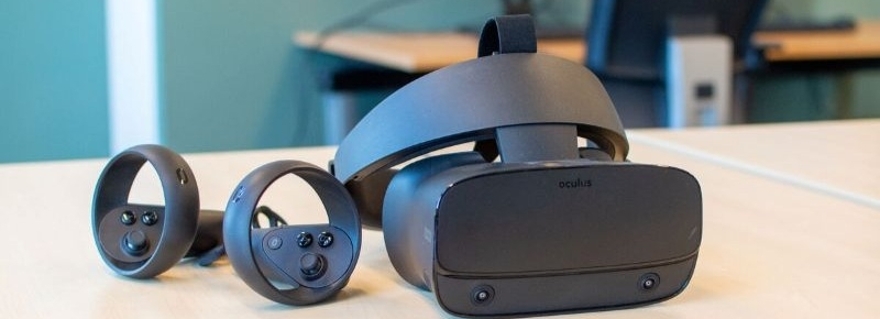
Waag Futurelab, TU Delft’s Future Museum Lab and Leiden University are teaming up to create the Theatrum Anatomicum Digitalis, an exhibition space and laboratory for mixed reality. It invites artists, curators, and scholars who want to curate exhibitions, or experiment with the display of art and artifacts, using advanced digital technologies like 3D scanning, 3D printing, AR or VR. A key part of our mission is also to make the Theatrum Anatomicum Digitalis a communal space for collaboration, group thinking sessions, and showcasing prototypes and works-in-progress.
The Theatrum Anatomicum Digitalis acts as a bridge connecting the building's past as a site of scientific inquiry with its present role as a hub for artistic and technological innovation. This collaborative infrastructure unites Leiden University and Waag Futurelab, fostering a unique blend of academic research and artistic exploration. In partnership with TU Delft's MuseumFutures Lab, the project delves deeper into digital technologies such as Mixed Reality to develop immersive and experimental exhibition formats.
Leiden Ludic Lab verbeteren - Angus Mol
With the opening of the Huizinga Humanities Hub in 2024, Leiden University will gain a new research laboratory: the Leiden Ludic Lab. The Ludic Lab is integrated into the Humanities Hub and will be used continuously for collective research projects that tie in with sector plans in the field of heritage and human technologies. The Lab also serves as a hub for research into play and educational collaborations with the faculties of Archaeology and Science. Now that the Lab is operational, applicants have identified key points for taking research activities to the next level, which will also benefit outreach and education. These points meet an immediate need or, when implemented, will make a major contribution to the profile, flexibility and consolidation of this fast-growing, interdisciplinary and socially influential research area at Leiden University.