
10,000 search results for “students” in the Public website
-
Following in nature's footsteps
A neural network mimics how our brain works. Evolutionary algorithms use the principle of natural selection to solve complex problems. This kind of 'natural computing' is being used to improve the diagnosis of Parkinson's disease or the production of steel.
-
Opposition to energy projects
Energy transition will entail the construction of large numbers of new energy installations. Such construction projects may meet with opposition from people living close by. Assistant Professor Bríd Walsh investigated how the local community can best take part in such projects.
-
Admission
Find out how the admission procedures for PhD candidates at LUCAS are structured.
-
Cryogenics Department
The Cryogenics Department has a liquid helium production unit and an automatic liquid nitrogen filling plant.
-
Prediction of human (CNS) target site concentrations in health and disease
Prediction of human (CNS) target site concentrations in health and disease In the vision of Prof. de Lange we will only be able to predict human (central nervous system, CNS) target site concentrations and effects if we perform systematic, condition-dependent, integrative, and strictly quantitative…
-
Most frequently asked questions
Do you have a question about our course offer? View the most frequently asked questions below.
-
Required documents
To complete your application for LUC The Hague, you need to submit all of the required documents in the Leiden University application portal (uSis).
-
Worlding America: How Play Shaped the United States between New Media and New Politics
WORLDING AMERICA researches how ‘play’ has been a key force in the past and present process of creating America as a coherent and hegemonic ‘world,’ from 1503 to the present.
-
Crete as melting pot: research into Late Antique, Byzantine and Early Islamic material culture at Gortyn, Greece
What does the excavated material tell us about the continuation and/or change of urban life during the transitional phrases from Antiquity to the Middle Ages on Crete and in the eastern Mediterranean more generally?
-
Research per university
What follows is a survey of existing programs and current projects for each of the participating universities.
-
The skeleton as a source of information
Bones hold a wealth of information about a person’s life, revealing details about where they came from, how old they were when they died and what diseases they may have had. Scientists can use this data to piece together aspects of an individual's life, offering valuable insights that can help address…
-
The Dakhleh Oasis Project
Update : March 2020 A.J. Mills
-
Special recognitions
Every year, the World Cultural Council grants special acknowledgements to five to ten young researchers or scholars of the host country who have achieved outstanding performance in the fields of science, education or arts.
-
Queering the Museum: Contemporary Artists and Curators as ‘Critical Visitors’ and their Creative Interventions
Doctoral research on recent developments in museological practices by “critical” curators, interventionist artists, and personnel initiatives, focusing on ‘queering’ as an entrance point to broader intersectional issues; resulting in a report on the ‘Queer Baseline’ (to be launched in 2020), a popular…
- Week 6: 11–17 February
-
Atrocities: when does the world intervene?
If we want to solve global problems, we need to know about both the theory and the practice. How does the international community make decisions about military intervention, for instance? Why is it such a complex process? Professor Herman Schaper has represented the Netherlands at the United Nations…
-
African Studies (BA)
Africa is fascinating! In today’s globalised world, the continent plays an increasingly important role in international, social and cultural developments. Would you like to explore the many sides of Africa and its impact on the rest of the world, while also learning one of its languages? Our African…
- Week 2: 11-17 January 2026
-
Core Facilities
Core Facilities are shared resources that provide access to instruments, technologies and services to researchers across the Institute of Biology. They are staffed by scientists with vast experience in their field, ensuring that all researchers can count not only on the latest available technology…
-
Emotional Labour in the Borderlands: A new perspective on ethno-racial profiling
What impact does ethnic profiling and accusations of ethnic profiling have on organisations and the border police officers working at the operational level, and what structural factors on the societal and organisational level contribute to the process of ethnic profiling? Over a period of three years…
-
Admission requirements
To be eligible for Arts, Literature and Media (research) at Leiden University, you must meet the following admission requirements.
-
Admission requirements
To be eligible for Asian Studies (research) at Leiden University, you must meet the following admission requirements.
-
Admission requirements
To be eligible for the History Research Master at Leiden University, you must meet the following admission requirements.
-
Admission requirements
To be eligible for Linguistics (research) at Leiden University, you must meet the following admission requirements.
-
Admission requirements
To be eligible for Middle Eastern Studies (research) at Leiden University, you must meet the following admission requirements.
-
About the Krijn Rietveld Memorial Awards
The awards honour Krijn Rietveld’s vision of science that creates real-world impact. Explore how the programme evolved, how the awards are structured today, and the values that continue to inspire researchers across disciplines.
-
Visiting scholars criminal law and criminology
The Institute of Criminal Law and Criminology is committed to international cooperation and exchange.
-
About the programme
To maximise your personal development, we ensure tutorials are small-scale and staff members extremely accessible. In year one, you’ll have an average of 12 contact hours, half of which comprise lectures (in English) and the remainder tutorials (optionally Dutch or English).
- Week 1: 6-12 January 2019
-
Global Transformations and Governance Challenges
Welcome to Leiden University's Global Transformations and Governance Challenges (GTGC) programme! GTGC explores how innovative policies and governance arrangements can address global challenges in democratic, effective, fair, peaceful and sustainable ways.
-
Past Projects
Here you can find an overview of the past projects of the Leiden Leadership Centre.
-
Ethics: how selfless should a self-driving car be
Intelligent machines are going to make ethical decisions too. Should a self-driving car be allowed to slam into pedestrians to save its passengers from a head-on collision? Should a negotiation app be able to detect stress in your opponent’s voice? And who makes these decisions: the user, the system’s…
-
Invaluable bees and nature’s other services
We depend on nature for so many things: from clean water, wood and food to carbon absorption, water purification and coastal protection, as well as for relaxation, inspiration and identity. Nevertheless, our modern world putting increasing pressure on these ecosystem services. Leiden researchers investigate…
-
Train your brain!
Neuroimaging research has greatly advanced our insights on how the brain is organized. Now is the time for the next step: Imagine what would be possible when we cannot only map brain-functioning, but use neuroimaging to voluntarily regulate brain-activity!
-
Alumni in the Picture
An academic program is only as successful as its graduates
-
Admission requirements
To be eligible for North American Studies at Leiden University, you must meet the following admission requirements.
-
Violence, Interventions, and Policing (MSc)
What is the nature and scope of violence? Who offends, and in what context? Who are the victims? And how can we design suitable intervention and prevention strategies? In this track, you will be familiarised with the many faces of violent offending, to provide the knowledge and tools to understand,…
-
Climate adaptation and biodiversity
The university is making its campuses future-proof with measures for climate adaptation and biodiversity. You can read in the Sustainability Implementation Agenda 2023–2026 how we harvest rainwater, limit heat stress and make more room for greenery.
-
Our facilities
In support of the research and education, the Leiden Institute of Advanced Computer Science (LIACS) has a Research and Education laboratory at its disposal. Within this environment, we can offer machines that go beyond normal office automisation and production.
-
The Hague Program for Cyber Norms
A research program that focuses on the development and implementation of cyber norms.
-
Martinique
Since 2005 Leiden fieldschools have maintained local collaborations with archaeologists on Martinique carrying out surveys and excavations.
-
Online library
Immerse yourself: read books, listen to podcasts and watch films about racism, discrimination and the colonial past.
-
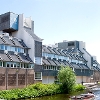 Lipsius
Cleveringaplaats 1, Leiden
-
Admission requirements
To be eligible for the masterprogramme European Law at Leiden University, you must meet the following admission requirements.
-
Arts, Literature and Media (research) (MA)
Explore the intersection of arts, literature, and media in this interdisciplinary research master’s programme. Whether you're interested in medieval manuscripts or modern digital culture, this programme offers the flexibility to tailor your studies to your interests.
-
Programme structure
The international bachelor's programme in Cultural Anthropology and Development Sociology covers three years, allowing you to establish a firm foundation and specialise in topics that you find interesting.
-
Global Archaeology (MA)
With the unique programme in Global Archaeology at Leiden University you will explore the archaeological past of Europe, the Mediterranean and West Asia, or the Americas. You address the impact of global developments on the area of your choice. The courses prepare you for a career as a regional archaeologist…
-
About
The Leiden Papyrological Institute is the only papyrological institute in the Netherlands. The members of our staff publish Greek (and Latin), Demotic (and Abnormal-Hieratic) and Coptic papyri from collections all over the world, including our own collection.
-
St. Lucia
Fieldwork
-
Admission requirements
To be eligible for Philosophy of the Arts at Leiden University, you must meet the following admission requirements.