496 search results for “does en slechthorend” in the Public website
-
First clinical trial with genetically modified malaria vaccine completed
In an innovative study, Radboudumc and LUMC jointly tested a candidate vaccine based on a genetically weakened malaria parasite. The results of this clinical trial, published in Science Translational Medicine, show that the vaccine is safe and elicits a defense response against a malaria infection.
-
Pedagogiek en digitaliteit: een wederzijdse provocatie
Inaugural lecture
-
Archaeological Forum: Gül Aktürk en Murat Dirican
Lecture
-
To what extent does your background and your own physical consciousness influence your experience in VR?
Neuroscientists Ineke van der Ham (Leiden University) and Anouk Keizer (Utrecht University) regularly use VR in their research. Their experiences with the medium raise many questions about the ways VR is experienced by different people. Therefore they conducted an VR experiment at the cinedans festival…
-
Interview Mare: Microplastics are everywhere, we don't know yet if that does no harm
Microplastics are small pieces of plastic found in the environment. At CML research have been conducted in the distribution of these plastics on beaches around the world using citizen science. In addition, CML is conducting in depth case-studies in the Caribbean and along the Dutch coast. Follow-up…
-
What does it actually say? Linguist launches video series on wall poems
The city centre of Leiden is covered in them: wall poems. When roaming around, you come across poetry written in the Latin alphabet, but also in scripts that might be more difficult to understand for the average person living in Leiden. In a new series of videos, Tijmen Pronk talks more about this.
-
Where does this Inca language come from? Verb conjugations should provide some answers
When university lecturer Martine Bruil was on exchange in Ecuador as a teenager, she fell in love with the area's ancient languages. Now, more than 20 years later, she is starting a research project on the kinship of the language Awapit with the Quechua language that was spread by the Incas.
-
Does your smartwatch say you’re stressed? It may often be wrong
Consumer grade smartwatches may not be as accurate as promised when measuring tiredness or stress. That is the conclusion of researchers Björn Siepe and Eiko Fried based on a comparison between smartwatch measurements and self-reports by users.
-
How does the European Union tackle disinformation? ‘Much more than a security issue’
During her work for the European Union, Sophie Vériter witnessed how young people in countries like Ukraine and Moldova were exposed to Russian propaganda. After mapping out the EU’s disinformation policy, the PhD candidate now advocates for a revised approach.
-
Does unmanned civil aviation have a place in current international legislation?
In ten years, it is projected that ten percent of global civil aviation operations will be unmanned. Are the current international aviation laws and regulations up to these technological developments? Fernando Fiallos will defend his dissertation on 14 November 2019.
-
What does ‘human’ really mean? When Philosophy and archaeology join forces
Archaeology is the only science that allows us to study the material traces left by most of human evolution. But what happens when we bring philosophy into the picture? A new series of papers demonstrates how philosophical reflection can enrich archaeological research - especially when grappling with…
-
What does the popularity of AI mean for the legal field?
In recent years, artificial intelligence has deeply permeated our society and the legal field is no exception. Bart Custers, Professor of Law and Data Science, spoke to ‘Mr. Online’ about AI and the law: ‘AI is currently a hype.’
-
Does a Prime Minister with no party affiliation have any clout?
Although Dick Schoof, of no party affiliation, has been nominated by the four coalition parties as the new Dutch Prime Minister, various experts have expressed doubts. Can he lead the new cabinet? Wim Voermans, Professor of Constitutional and Administrative Law, spoke to 'RTL Nieuws'.
-
Organ failure caused by viruses, how does it work? Now there are methods to find out
Dying from viral infection due to organ failure and blood loss: we still know little about how it can happen. Among other things, Huaqi Tang developed an organ-on-a-chip to figure it out. 'These technologies can offer unprecedented opportunities to fight the viruses that threaten our society.' Tang…
-
What does the Wadden Sea sound like? New research sheds light on porpoises and underwater noise
‘Wadden Sea Sounds’ is the name of a new project launched by the Waddenvereniging in collaboration with researchers from Leiden University and the University of Groningen. The aim is to find out how underwater noise affects marine life in the Wadden Sea.
-
'A Disney-version of Nimrud does not bring back history'
The Iraqi archaeological site of Nimrud was recently recaptured from IS. The site has been severely damaged. The question now is, what to do with it? Should it be restored? Bleda Düring spoke with Trouw about this complex issue.
-
Wat doe je als je niet meer achter het toneelstuk over jouw leven staat?
Sonja Barend distantieert zich van het toneelstuk Sonja, dat gebaseerd is op haar boek. Dirk Visser, hoogleraar intellectueel eigendomsrecht, gaf uitleg in het AD: ‘De auteurs hebben het recht om te zeggen dat ze niet meer achter de productie staan.’
-
Lion conservation in Kenya: why one approach does not fit all
Lions in Kenya respond very differently to human land use, climate and conservation practices. That is the conclusion of thesis from Leiden biologist Monica Chege. A uniform approach is therefore insufficient. ‘Effective conservation only works when management is tailored to local conditions and developed…
-
Vidi Grant for Stefan Semrau: how does bioelectricity shape embryonic development?
Leiden biophysicist Stefan Semrau was granted an NWO Vidi earlier this month. He will use the grant to study the role of electricity in embryonic development and tissue regeneration.
-
Why does Ronald Mulder experience hardly any ice friction at 60 km/h?
How can Ronald Mulder run his skates across an ice layer at 60 km/h? His skating blades get help from a lubricating layer of meltwater. In Leiden, physicists found this explanation to be incomplete. Theoretician Hans van Leeuwen and experimental physicist Tjerk Oosterkamp searched for a deeper answe…
-
A new perspective on pneumonia: what does our body tell us about the cause?
Effectively treating a severe case of pneumonia is often challenging. Identifying the pathogen behind it can be difficult. PhD candidate Ilona den Hartog tried something new: ‘We searched for answers in substances our own body produces.’ PhD defence on 17 September.
-
Does Trump have the authority to single-handedly take on Mexican drug cartels?
The American president Trump is considering military intervention in Mexico to get rid of the drug cartels once and for all, but Mexico is not interested in other countries' interventions. According to Jelle van Buuren, Assistant Professor at the Institute of Security and Global Affairs, Trump's much…
-
What impact does communication have on individuals dealing with advanced cancer? Looking for participants
This study is important because it seeks to uncover whether clinicians' communication influences neurobiological and physiological outcomes for patients.
-
Thijs Brocades Zaalberg: 'How does the discourse on war influence practice?'
As a student, Thijs Brocades Zaalberg was primarily interested in diplomacy surrounding conflicts. Through research on peace operations and subsequently the fight against guerrillas, he became increasingly involved with the most violent aspects of colonial warfare. Per 1 September 2024 he is appointed…
-
What does a cell eat? This new tool makes it visible
What if you could watch a single cell eat in real time? This could answer questions about diseases such as cancer. PhD candidate Yixuan Wang has developed a glowing chemical tool that makes this possible, revealing how living cells take in nutrients.
-
naar online prijsdiscriminatie? Kimia Heidary, Bart Custers, Helen Pluut en Jean-Pierre van der Rest schreven hier een artikel over.
Hoe kijken Nederlandse bedrijven naar online prijsdiscriminatie? Kimia Heidary, Bart Custers, Helen Pluut en Jean-Pierre van der Rest schreven hier een artikel over.
-
Lottery procedure used for coffeeshop licence
The Dutch municipality of Deventer recently organised an open tender to grant a coffeeshop licence, drawing 1035 responses. Annemarie Drahmann, associate professor in administrative law, commented in ‘Trouw’ newspaper about this procedure.
-
The Hague aims to attract legal tech start-ups
In an interview with Jaap van den Herik, Professor emeritus Law and IT, legal magazine Mr. writes that The Hague municipality wants to attract more legal tech start-ups. The municipality has therefore commissioned the Leiden Centre of Data Science (LCDS) of Leiden University to conduct a study into…
-
New professor Elise Dusseldorp: ‘The longer you’re in research, the more humble you become’
Elise Dusseldorp has been appointed Professor in the Methodology and Statistics of Psychological Research. In the same way that she spends her spare time rambling through the forest, as a professor she sifts through colleagues’ research data. ‘I often come across information that doesn’t appear in the…
-
zonnestelsel: de prachtige planetaire paralellen van tastbare gesteenten en inspirerende landschappen
Lecture
-
NWO Grant for Research into the History of Languages: ‘It tells us something about our past as humans’
A collaboration between linguists, geographers and anthropologists aims to uncover how languages spread across South America over thousands of years. Associate Professor Rik van Gijn is responsible for the linguistic side of this NWO project.
-
New Master’s programme in Transfusion Medicine and Cellular and Tissue Therapies
LUMC and Leiden University will start the new two-year online master's program in Transfusion Medicine and Cellular and Tissue Therapies from October 2023.
-
Leiden collaboration supports development of vaccine against coronavirus
The Department of Medical Microbiology of Leiden University Medical Centre (LUMC) will investigate the efficacy of a new experimental vaccine from the pharmaceutical company Jansen against the coronavirus. The research is being conducted in collaboration with the The Janssen Pharmaceutical Companies…
-
'Au Liban', but 'en Iran': external sandhi in French prepositions at the syntax-phonology interface
Lecture, Com(parative) Syn(tax) Series
-
bouwen tussen wetenschap en praktijk – Evidence based practice als kompas voor de beste zorg voor kinderen, jongeren en gezinnen
Inaugural lecture
-
Subsidie voor Shelley van der Veek om peuters gezonde eetgewoonten aan te leren
Het onderzoeksproject heeft als doel ouders te helpen hun kleuters gezonde eetgewoonten aan te leren door het bevorderen van sensitieve voeding tijdens de fase wanneer peuters kieskeurig met eten worden.
-
Saniye Çelik on Dutch NOS Radio 1 News: Acknowledging racism and discrimination is the first step to a solution
Not only the United States but also the Netherlands are faced with 'systemic problems' to do with racism and discrimination, according to Dutch Prime Minister Rutte during a press conference held on 3 June. The Prime Minister responded to the events taking place in the United States after the death…
-
 Iliana Samara
Faculty of Social and Behavioural Sciences
i.samara.2@fsw.leidenuniv.nl | 071 5272727
-
 Elise Swart
Faculty of Social and Behavioural Sciences
e.k.swart@fsw.leidenuniv.nl | 071 5272727
-
‘The Geopoliticisation of Europe’: Joris Larik delivers the Havel-Cleveringa Lecture
Where European integration has long been understood as a peace project, Joris Larik argued in his Havel-Cleveringa Lecture that recent developments point to an accelerated shift towards a European Union that places its interests, security and geopolitical position more centrally.
-
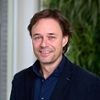 Thijs Brocades Zaalberg
Faculty of Humanities
t.w.brocades@hum.leidenuniv.nl | 071 5272770
-
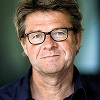 Patrick Dassen
Faculty of Humanities
p.dassen@hum.leidenuniv.nl | 071 5271646
-
 Nanne Timmer
Faculty of Humanities
n.timmer@hum.leidenuniv.nl | +31 71 527 2184
-
Studieavond: de complexiteit van diversiteit en inclusie bij de politie
Lecture
-
Student for a day at Politicologie: Nationale en Internationale Politiek
Study information
-
Alternatieve Bekostiging in de zorg: Ruimte bieden en begrenzen
Inaugural lecture
-
Uit de schaduw: ethiek als fundament van inlichtingen en veiligheid
Inaugural lecture
-
Congo’s vergeten oorlog? Geweld, mineralen en macht
Lecture, Leids Actualiteitencollege
-
Op voet van gelijkwaardigheid? Schaal en democratie in de Koninkrijksrelaties
Inaugural lecture
-
Laboratoriumgeneeskunde in beweging: patiënt en professional in perspectief
Valedictory lecture, minisymposium